As cyber threats continue to evolve, organizations responsible for critical infrastructure, defense systems, industrial control networks, and sensitive government operations face increasing pressure to protect their most valuable digital assets. Traditional cybersecurity measures such as firewalls, intrusion detection systems, and encryption play important roles, but they may not always be sufficient against advanced persistent threats (APTs) and sophisticated cyberattacks.
This is where data diodes come into play. Designed to provide the highest level of network security, data diodes create physically secure networks by allowing information to travel in only one direction. This hardware-enforced security mechanism eliminates the possibility of unauthorized access, malware infiltration, and data exfiltration through connected systems.
In this article, we'll explore what data diodes are, how they work, their key benefits, and why they are becoming essential components of modern cybersecurity architectures.
What Is a Data Diode?
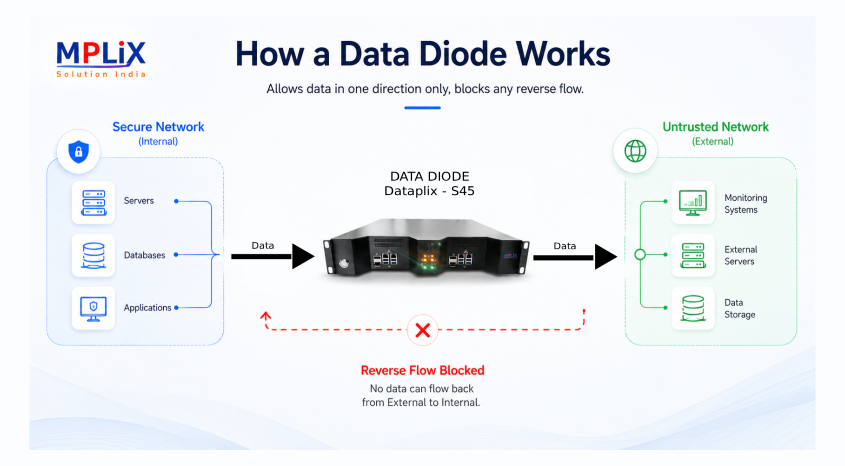
A data diode is a hardware-based cybersecurity device that enforces one-way data flow between two networks. Unlike traditional network security solutions that rely on software rules and configurations, a data diode physically prevents data from traveling in the opposite direction.
The concept is similar to an electrical diode, which allows current to flow in only one direction. In networking, a data diode permits information to move from a secure source network to a destination network while completely blocking any return communication.
Because the restriction is enforced at the hardware level, attackers cannot bypass the protection through software exploits or configuration changes.
How Data Diodes Work
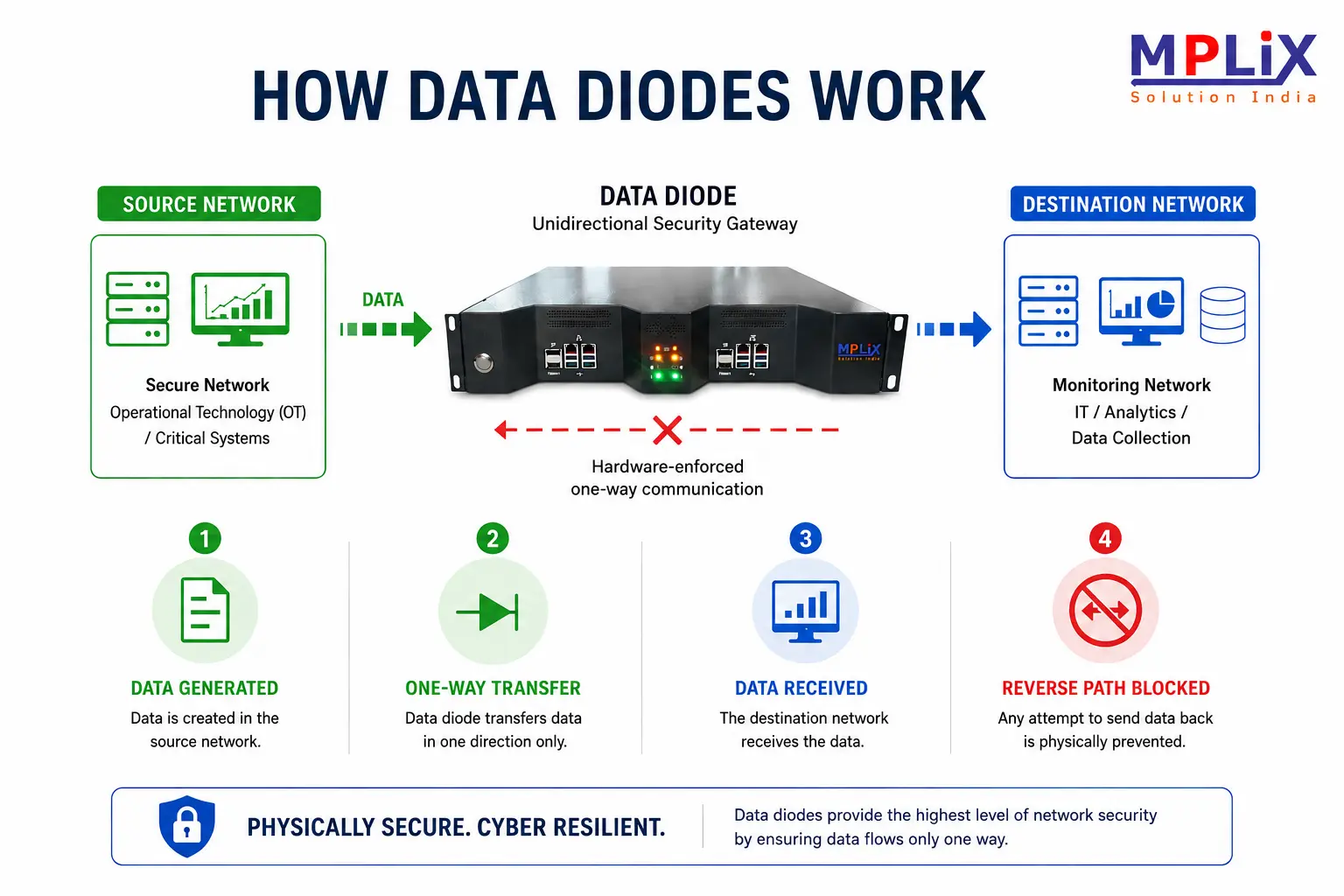
Data diodes typically consist of two network interfaces connected by a physical transmission mechanism that supports one-way communication.
Step-by-Step Process
1. Data Transmission Initiated
Information is generated on the source network.
2. Unidirectional Transfer
The data diode transmits information through a hardware-enforced one-way channel.
3. Reception on Destination Network
The receiving network obtains the data but cannot send any response back.
4. Physical Communication Block
Any attempt to establish reverse communication is physically impossible.
This architecture creates an air-gap-like level of protection while still allowing necessary data sharing between networks.
5. Reduced Attack Surface
Every open communication channel creates opportunities for attackers. By allowing communication in only one direction, data diodes significantly reduce the network's attack surface.
Industries That Rely on Data Diodes
Energy and Utilities
Power grids, nuclear facilities, and utility providers use data diodes to protect operational technology (OT) environments from cyber threats.
Government and Defense
Military organizations deploy data diodes to securely transfer intelligence data while protecting classified networks.
Manufacturing
Industrial facilities use data diodes to isolate production systems from corporate IT networks and external connections.
Oil and Gas
Pipeline operators and refinery operators rely on data diodes to safeguard critical operational systems from remote attacks.
Healthcare
Hospitals and healthcare organizations use data diodes to securely share medical information while protecting patient data and critical systems.
Data Diodes in Industrial Control Systems (ICS)
Industrial Control Systems and Supervisory Control and Data Acquisition (SCADA) environments are among the most common applications for data diodes.
These systems often require operational data to be sent to monitoring platforms, analytics systems, or business networks. However, allowing external systems to communicate directly with operational equipment can create severe security risks.
• Real-time monitoring
• Secure reporting
• Operational visibility
• Regulatory compliance
while preventing unauthorized access to control systems.
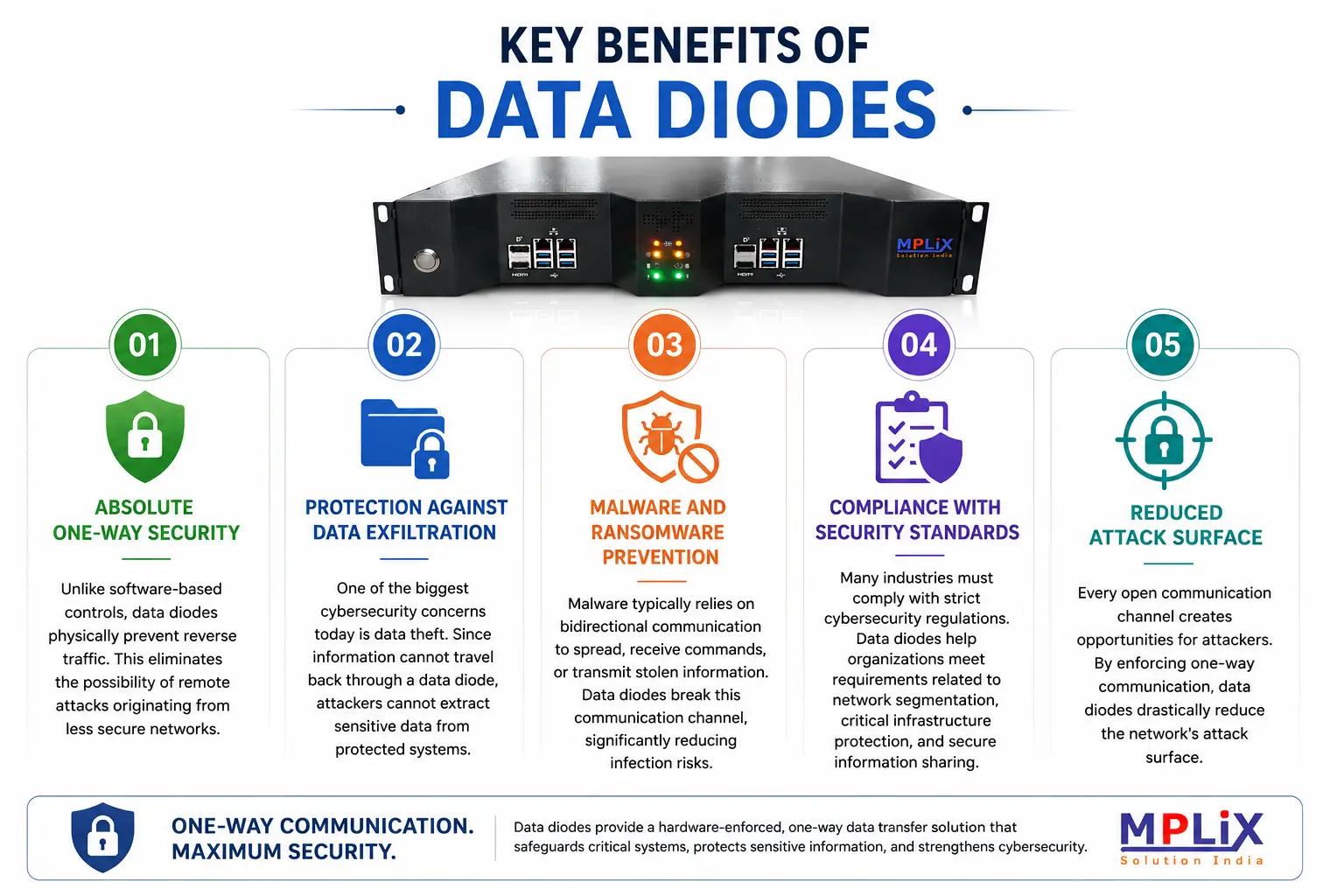
• Hardware-enforced protection
• Secure information sharing
• Critical infrastructure defense
• Long-term cybersecurity resilience
Emerging technologies such as Industrial IoT (IIoT), smart grids, and connected operational environments are expected to drive even greater adoption of data diode solutions worldwide.
Conclusion
As cybersecurity risks continue to grow, implementing data diode technology can be a strategic investment in long-term security, compliance, and operational resilience.
|
Author |
: Mplix Solution India |
|
Date |
: 10-06-2026 |
MPLIX offers hardware-based Data Diode solutions designed to provide secure one-way data transfer for critical infrastructure, industrial networks, OT environments, and air-gapped systems.
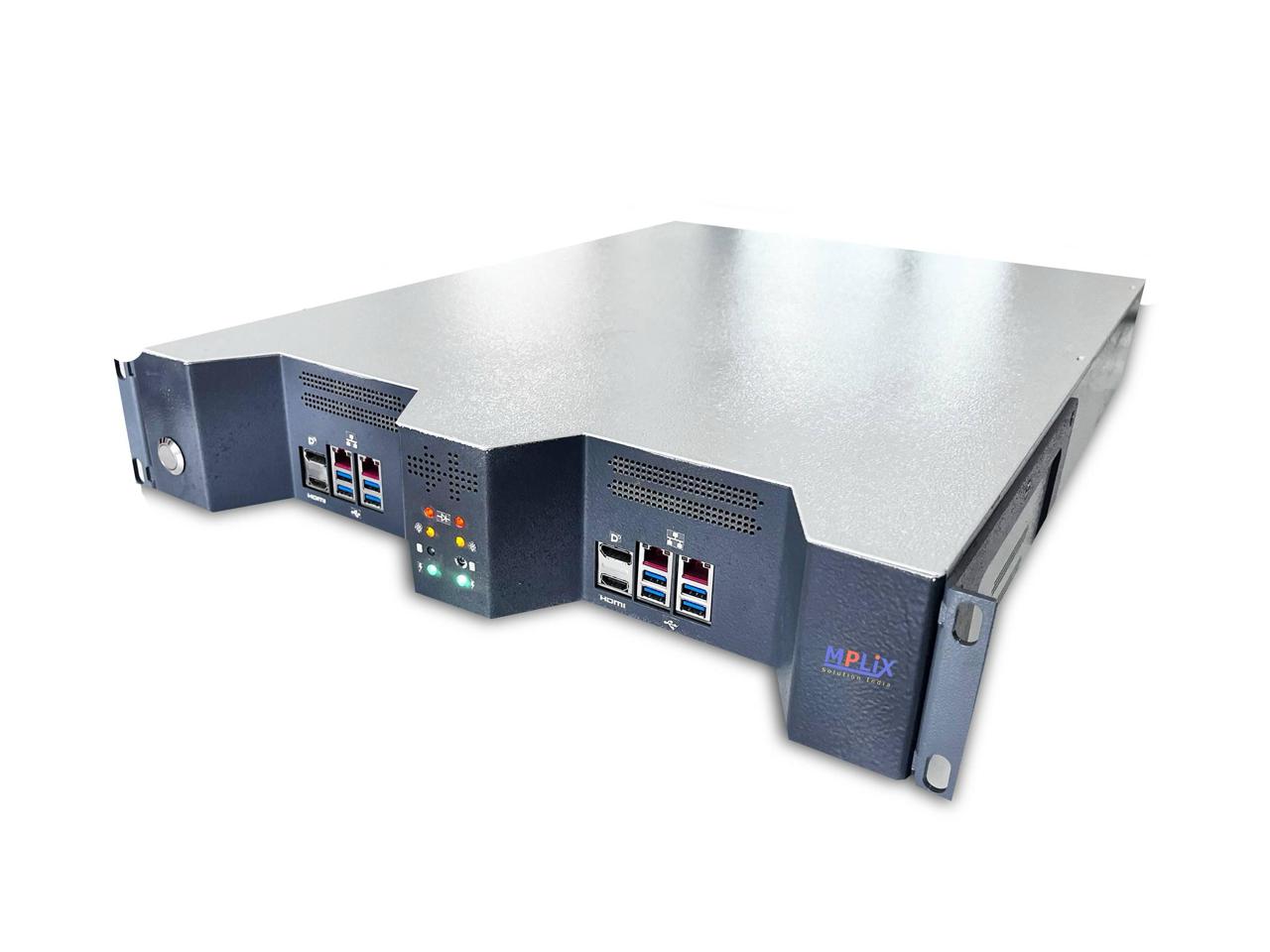
DataPlix-S45 is a high-assurance hardware Data Diode engineered for secure unidirectional data flow. It helps organizations protect critical assets, OT networks, SCADA systems, and sensitive infrastructure from cyber threats while maintaining operational visibility.
Everything you need to know about DataPlix-S45 Data Diode
- OR -