Air-gapped networks are considered one of the most secure methods of protecting sensitive systems from cyber threats. By physically isolating Operational Technology (OT), Industrial Control Systems (ICS), and other critical environments from external networks, organizations significantly reduce the risk of unauthorized access.
However, modern industrial operations still require operational data to be shared with enterprise networks, monitoring platforms, and analytics systems. This is where Data Diodes in Air-Gapped Networks become essential. By enabling hardware-enforced one-way communication, Data Diodes allow critical data to leave secure environments while physically preventing any inbound traffic.
What Is an Air-Gapped Network?
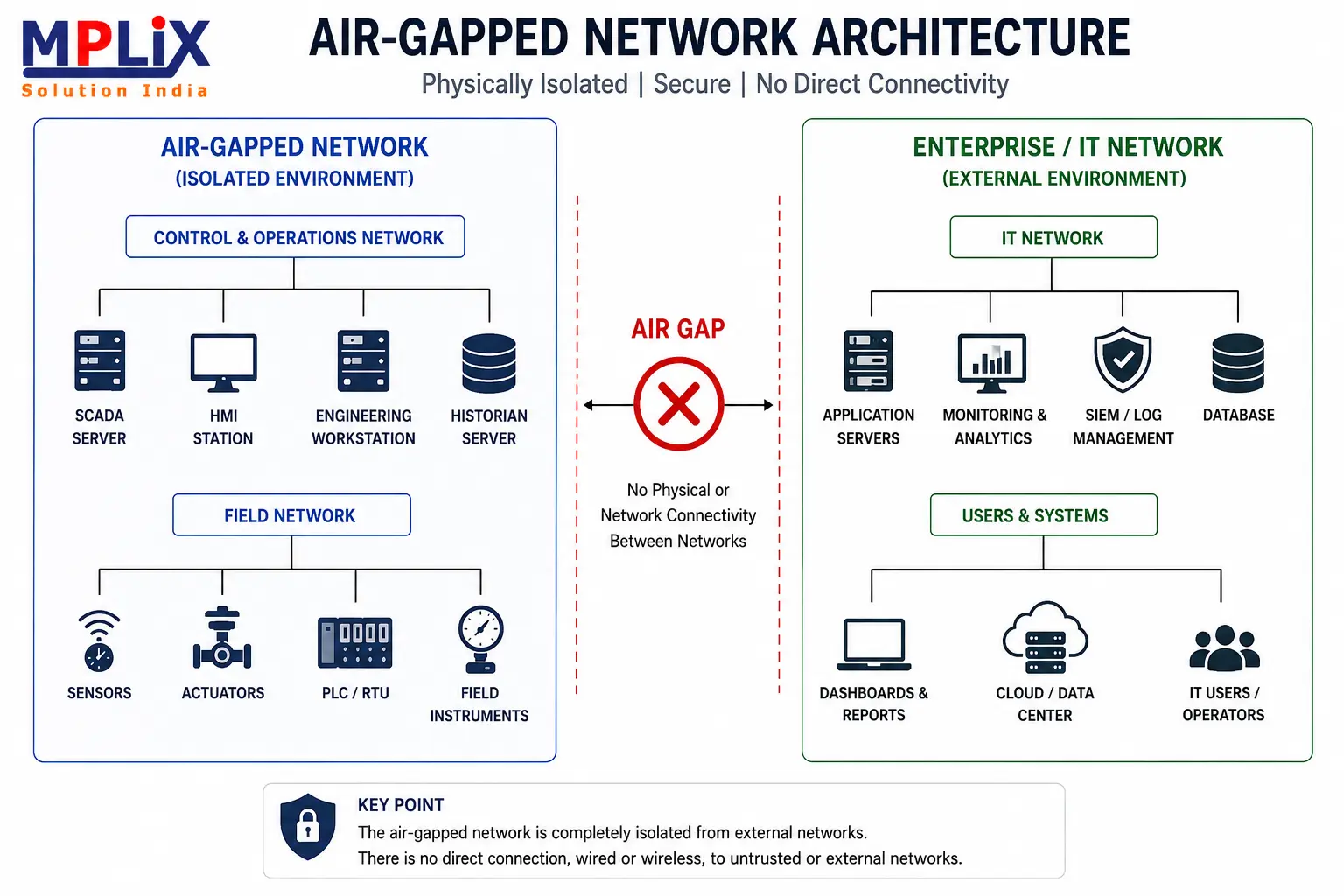
An air-gapped network is a computer network that is physically separated from unsecured networks, including the internet. Because there is no direct network connection, attackers cannot remotely access systems operating inside the isolated environment.
Air-gapped networks are widely deployed across industries where security and operational continuity are critical, including power generation, oil and gas, water treatment, manufacturing, defense organizations, government agencies, and nuclear facilities.
Although these environments remain isolated, organizations often require operational data for monitoring, reporting, compliance, and predictive maintenance without compromising security.
What Is a Data Diode?
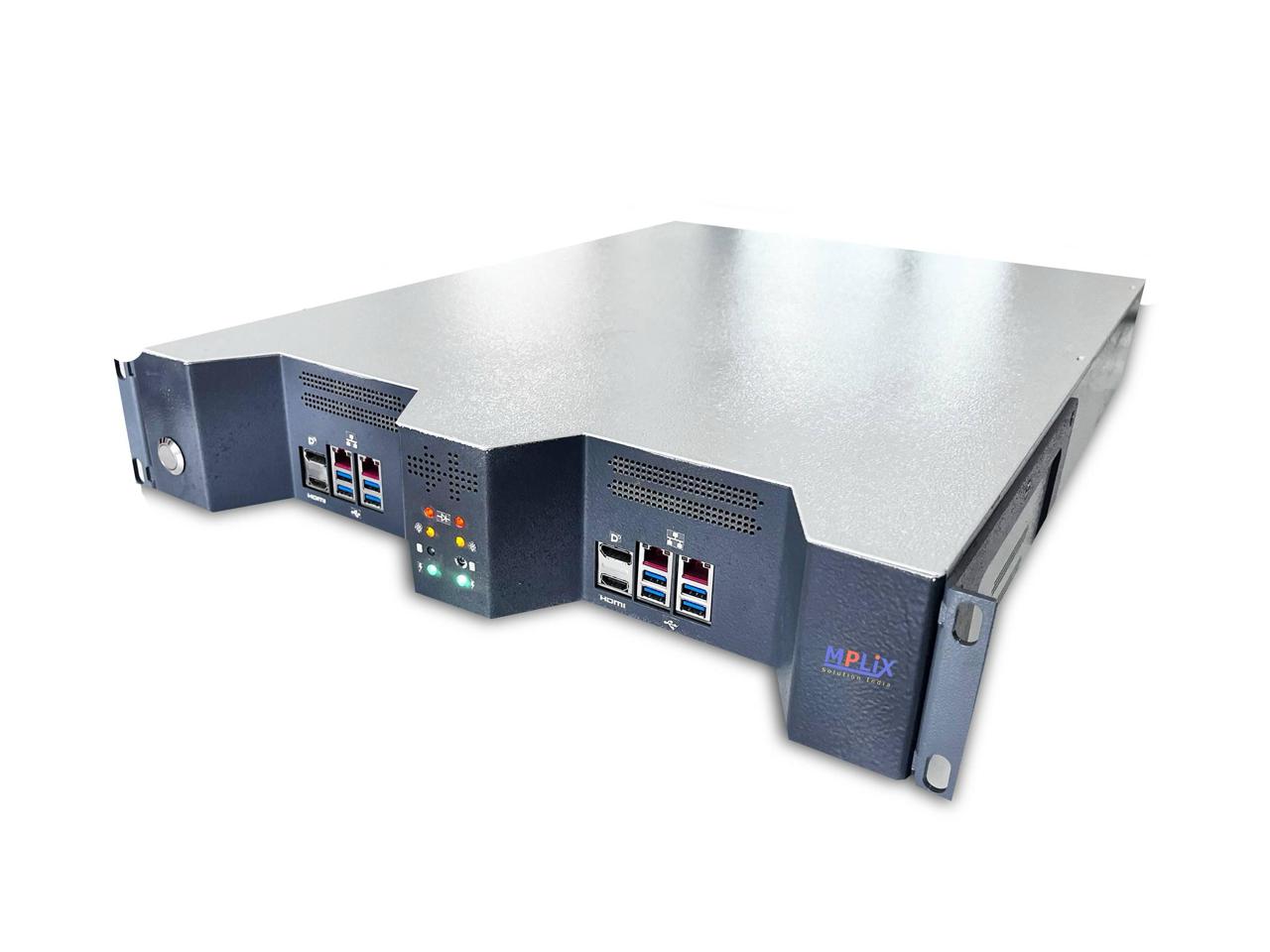
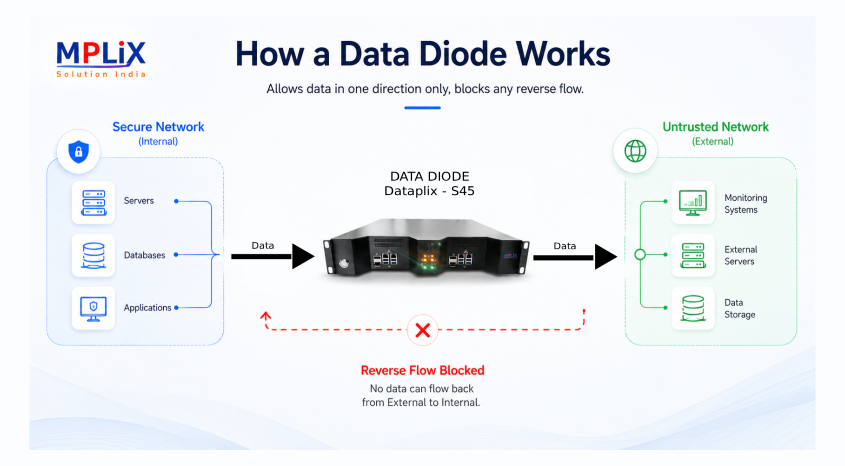
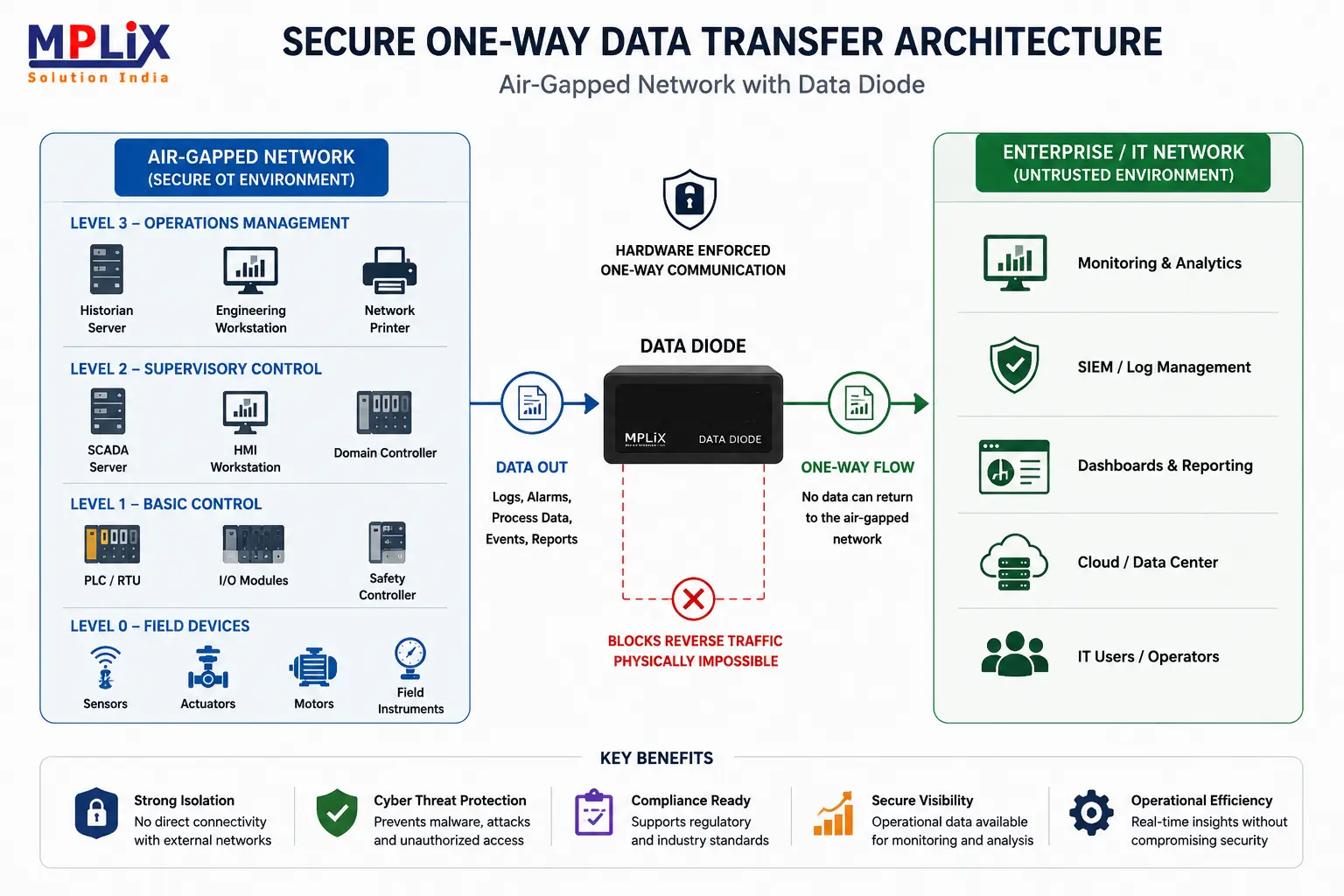
A Data Diode is a hardware-based cybersecurity device that allows information to travel in only one direction. Unlike traditional firewalls that rely on software rules, a Data Diode physically enforces one-way communication.
This allows operational data to leave protected environments while completely preventing inbound traffic, making remote attacks through the protected communication path impossible.
Because communication is enforced by hardware rather than software, Data Diodes provide one of the highest levels of network protection available for critical infrastructure.
Why Air-Gapped Networks Need Data Diodes
Although air-gapped systems remain physically isolated, organizations still need access to operational information for centralized monitoring and business intelligence.
Typical operational requirements include:
- Sending production data to enterprise dashboards.
- Forwarding logs to SIEM platforms.
- Monitoring equipment performance remotely.
- Sharing alarms with Security Operations Centers (SOC).
- Generating operational reports for business analytics.
Without a secure mechanism, organizations often rely on removable media or temporary network connections, increasing cybersecurity risks. Data Diodes eliminate these risks through secure one-way communication.
Key Benefits of Data Diodes
Hardware-Enforced One-Way Communication
Unlike software-based security solutions, Data Diodes physically guarantee that communication occurs in only one direction.
Protection Against Cyber Threats
Because inbound communication is physically impossible, ransomware, malware, and remote attackers cannot access protected operational systems.
Regulatory Compliance
Data Diodes help organizations comply with cybersecurity standards including IEC 62443, NERC CIP, and other critical infrastructure security frameworks.
Secure Operational Visibility
Organizations can safely transmit operational data to monitoring platforms without exposing critical systems.
Reduced Attack Surface
By eliminating inbound communication paths, Data Diodes significantly reduce opportunities for cyberattacks.
Common Applications
Data Diodes are widely deployed across industries where cybersecurity and operational continuity are essential.
- Industrial Control Systems (ICS)
- SCADA Environments
- Power Generation Facilities
- Oil & Gas Operations
- Water Treatment Plants
- Transportation Networks
- Defense Communication Systems
- Government Agencies
- Critical Manufacturing Facilities
- Financial Data Centers
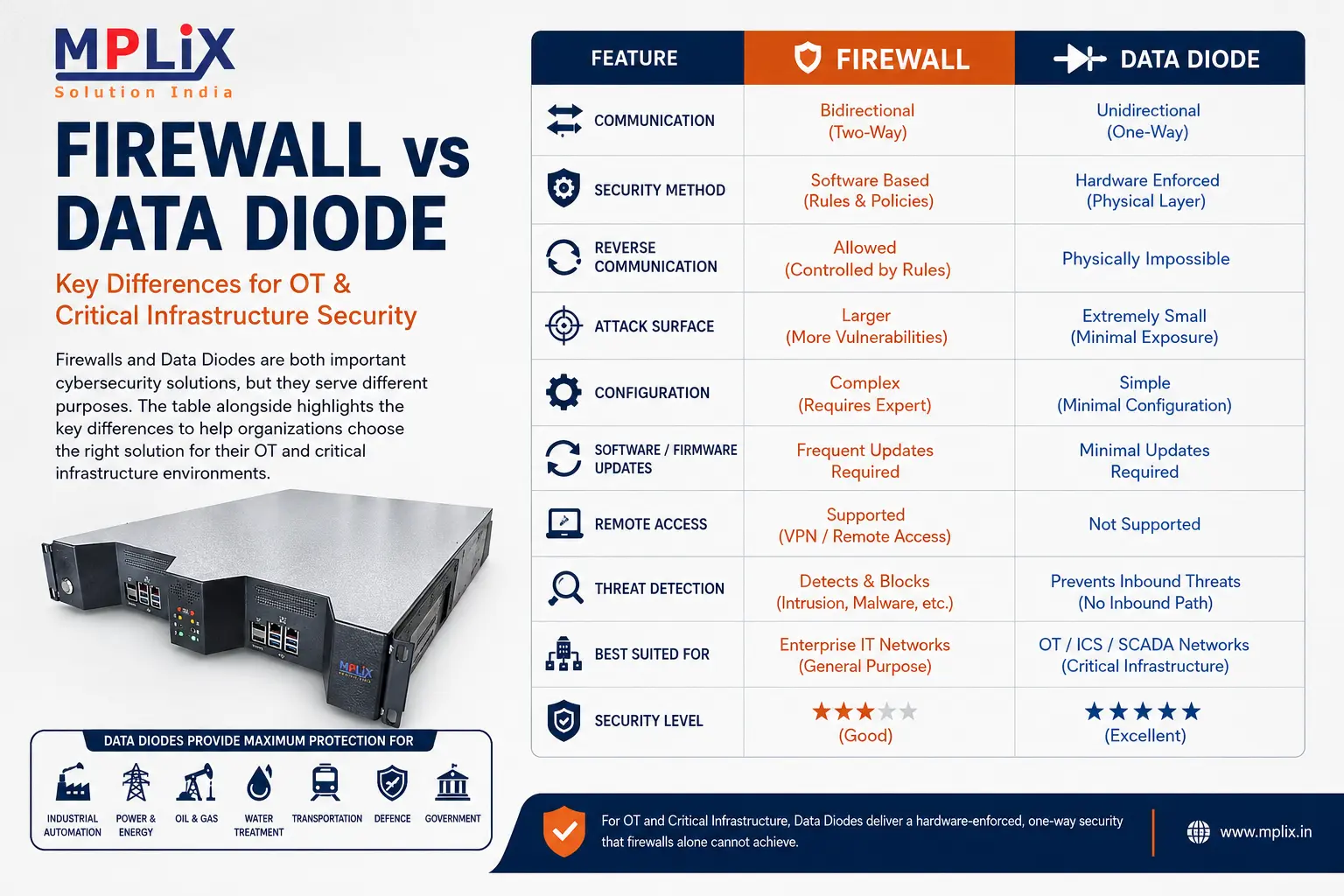
Data Diodes vs Traditional Firewalls
Although firewalls remain an important component of cybersecurity, they cannot provide the same level of physical isolation as Data Diodes.
Many organizations deploy firewalls alongside Data Diodes to build a layered cybersecurity strategy.
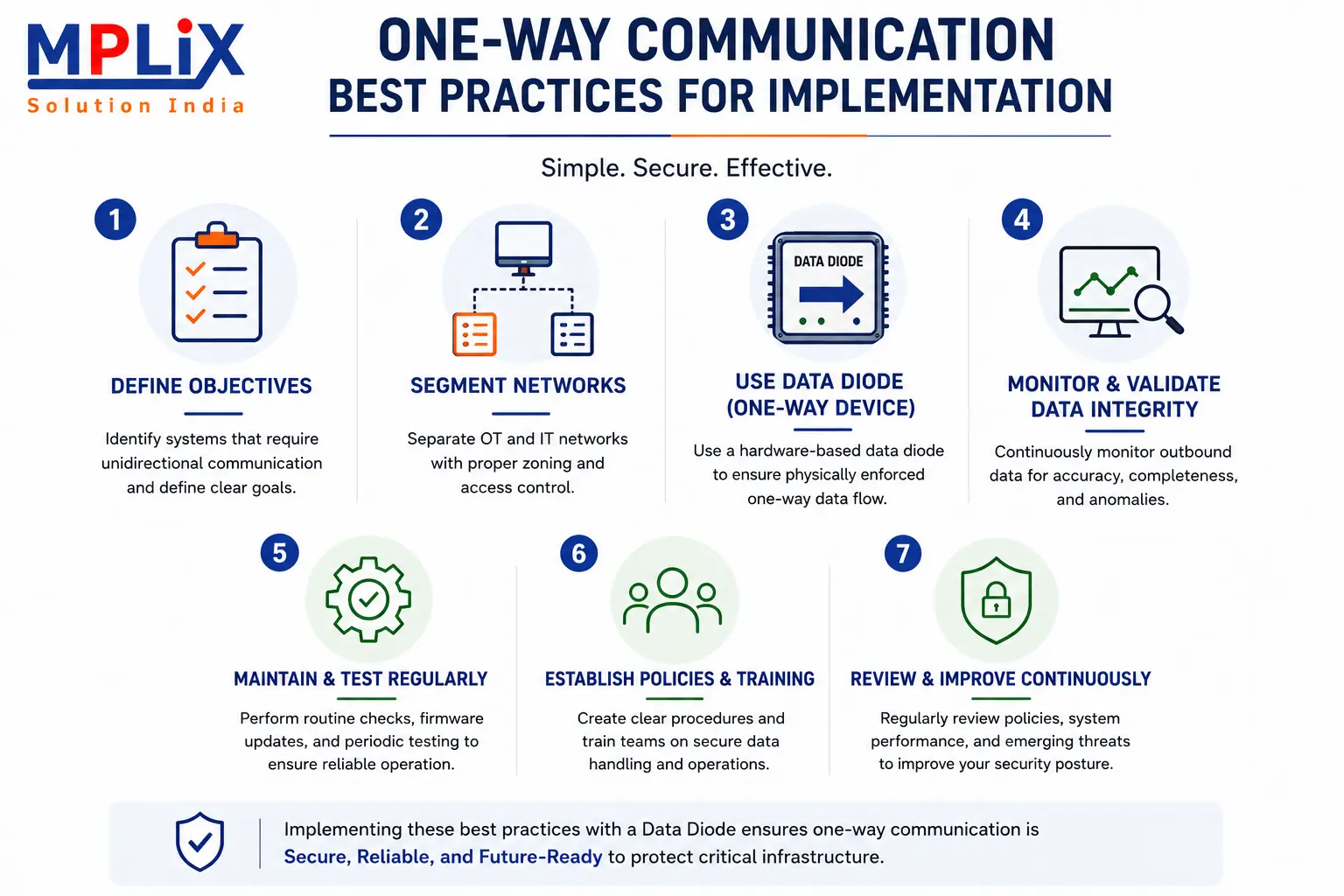
Best Practices for Deployment
- Identify systems requiring one-way communication.
- Transfer only essential operational data.
- Validate exported information before processing.
- Integrate with SIEM and centralized monitoring systems.
- Review network architecture regularly.
- Maintain firmware and hardware according to vendor recommendations.
Following these practices enables secure operational visibility while preserving complete network isolation.
Conclusion
As cyber threats continue to evolve, protecting critical infrastructure requires more than traditional software-based security. Data Diodes provide hardware-enforced one-way communication that enables organizations to securely share operational data while completely blocking inbound cyber threats.
By physically preventing reverse communication, Data Diodes offer unmatched protection for Industrial Control Systems, government networks, defense infrastructure, and other mission-critical environments.
For organizations focused on operational reliability, regulatory compliance, and long-term cybersecurity resilience, implementing Data Diodes in air-gapped networks remains one of the most effective security strategies available.
Frequently Asked Questions
1. What is the purpose of a Data Diode in an air-gapped network?
A Data Diode enables secure one-way communication by allowing information to leave an air-gapped network while physically preventing any inbound communication.
2. Can a firewall replace a Data Diode?
No. Firewalls rely on software policies, whereas Data Diodes enforce one-way communication through hardware, making them significantly more secure.
3. Which industries use Data Diodes?
Data Diodes are widely used in power generation, manufacturing, oil and gas, defense, government, transportation, healthcare, and other critical infrastructure sectors.
4. Are Data Diodes suitable for Industrial Control Systems?
Yes. Data Diodes are specifically designed to protect ICS, SCADA, and Operational Technology (OT) environments while enabling secure operational data sharing.