As organizations become more connected, the need for stronger cybersecurity continues to grow. Critical sectors such as manufacturing, energy, healthcare, transportation, and utilities rely on interconnected systems to improve efficiency and enable real-time monitoring. However, increased connectivity also creates new opportunities for cyberattacks.
Traditional security measures like firewalls and intrusion detection systems play an important role in protecting networks, but they still rely on software and configuration rules. For environments where even a single cyber incident can have serious consequences, organizations are increasingly adopting one-way communication security as an additional layer of protection.
What Is One-Way Communication Security?
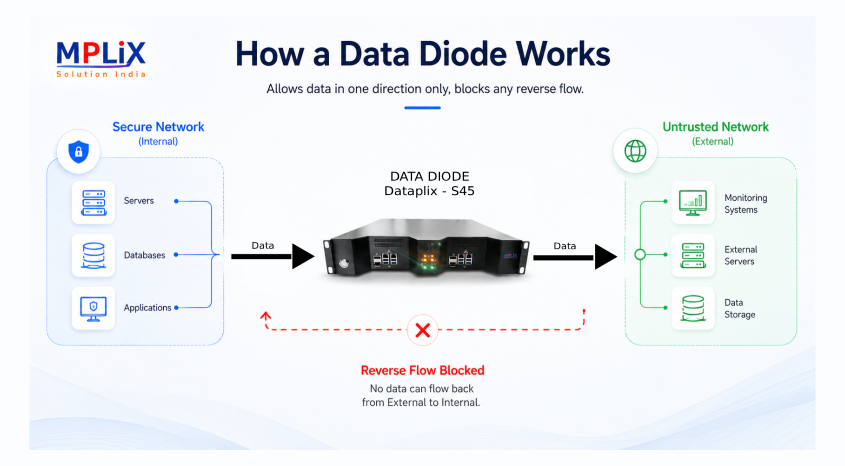
One-way communication security is a cybersecurity approach that allows information to travel in only one direction between two networks. Data can leave a secure environment, but no information, commands, or malicious traffic can travel back.
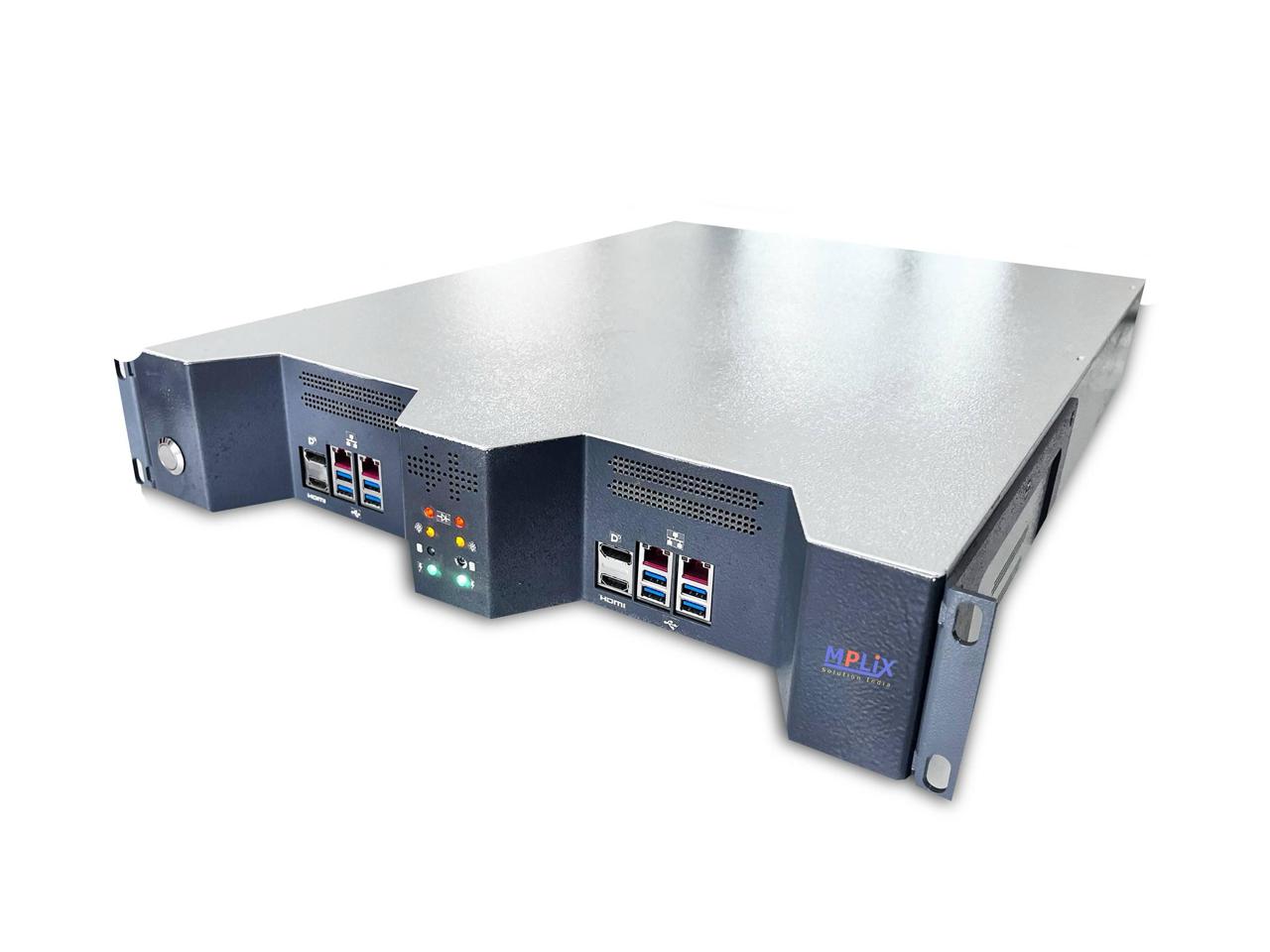
This architecture is commonly implemented using a Data Diode, a hardware device designed to enforce unidirectional communication. Unlike software-based controls, a Data Diode physically prevents reverse data flow, making it extremely difficult for attackers to gain access to protected systems through the connected network.
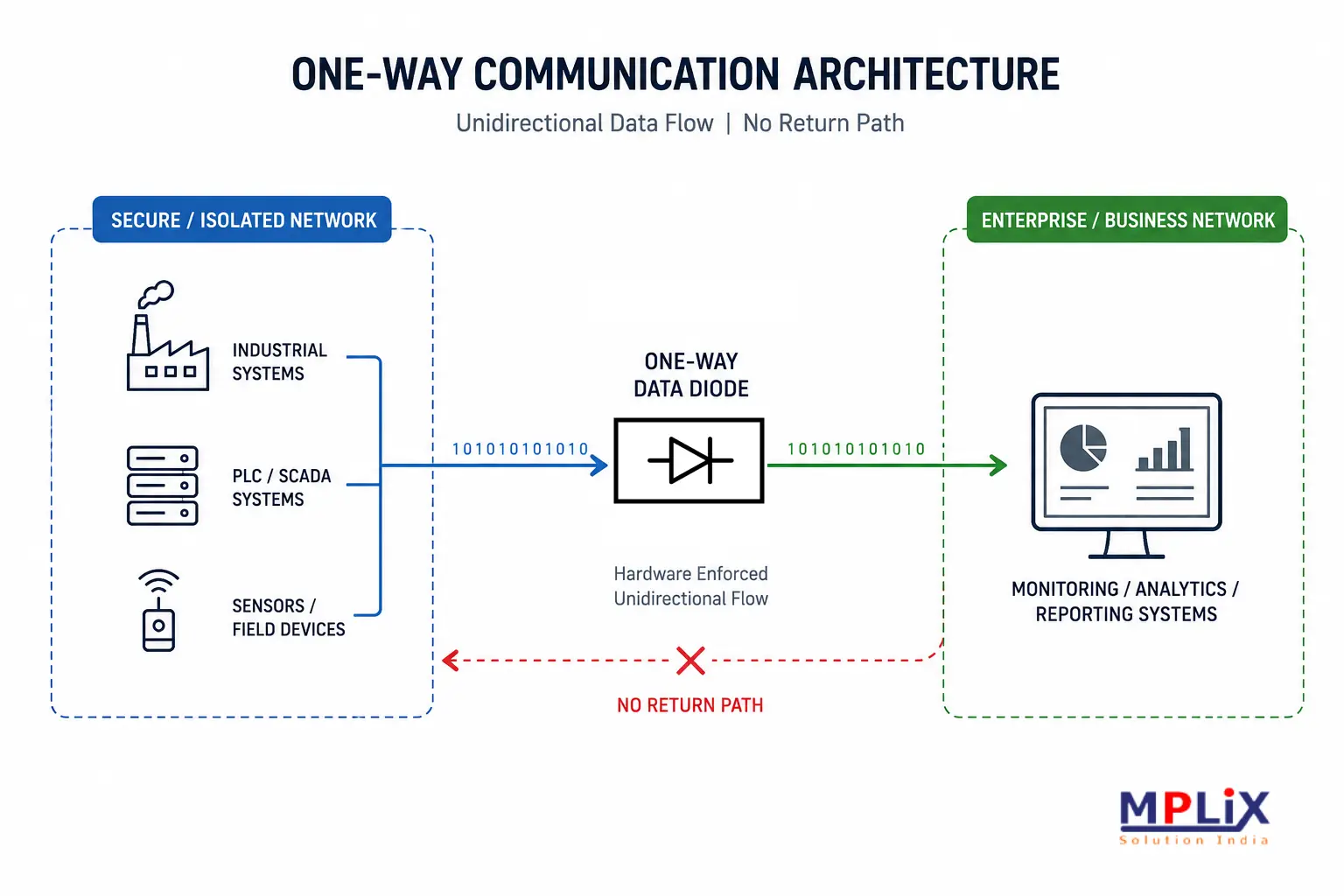 One-way communication security enforced using a hardware-based Data Diode.
Why Is One-Way Communication Important?
Many organizations need to transfer operational data from secure environments to enterprise systems for monitoring, reporting, or analytics. At the same time, they must prevent external networks from accessing mission-critical systems.
Software-based security solutions can help reduce risk, but they may still be affected by:
- Configuration errors
- Software vulnerabilities
- Zero-day exploits
- Compromised credentials
- Insider threats
One-way communication addresses these challenges by eliminating inbound communication paths altogether, significantly reducing the attack surface.
How Does One-Way Communication Work?
A one-way communication system connects two separate networks using hardware that allows data to move in only one direction.
For example, an industrial control network can safely send production data, sensor readings, or system logs to a business network for monitoring and analysis. However, because reverse communication is physically blocked, no commands or malicious traffic can be sent back into the protected environment.
This approach provides secure visibility without exposing critical systems to unnecessary cyber risks.
Key Benefits of One-Way Communication Security
Enhanced Cyber Protection
By preventing inbound traffic, one-way communication helps block remote cyberattacks, malware, ransomware, and unauthorized access attempts before they can reach sensitive systems.
Reduced Attack Surface
Removing unnecessary inbound connections minimizes the number of potential entry points available to attackers, making networks more resilient against cyber threats.
Secure Data Sharing
Organizations can safely transfer operational data such as equipment status, SCADA information, production reports, and security logs without compromising network isolation.
Improved Operational Reliability
Critical infrastructure often requires continuous operation. By reducing cybersecurity risks, one-way communication helps improve system availability and supports business continuity.
Support for Regulatory Compliance
Many cybersecurity frameworks encourage strong network segmentation and isolation for critical systems. One-way communication can support security strategies aligned with standards such as IEC 62443, the NIST Cybersecurity Framework, and NERC CIP.
Where Is One-Way Communication Used?
One-way communication security is widely adopted in industries where safety, reliability, and operational continuity are essential, including:
- Energy and Power
- Oil & Gas
- Manufacturing
- Water and Wastewater Treatment
- Transportation
- Government and Defense
- Healthcare
- Critical Infrastructure Operations
These industries benefit from secure data exchange while maintaining strong separation between operational and enterprise networks.
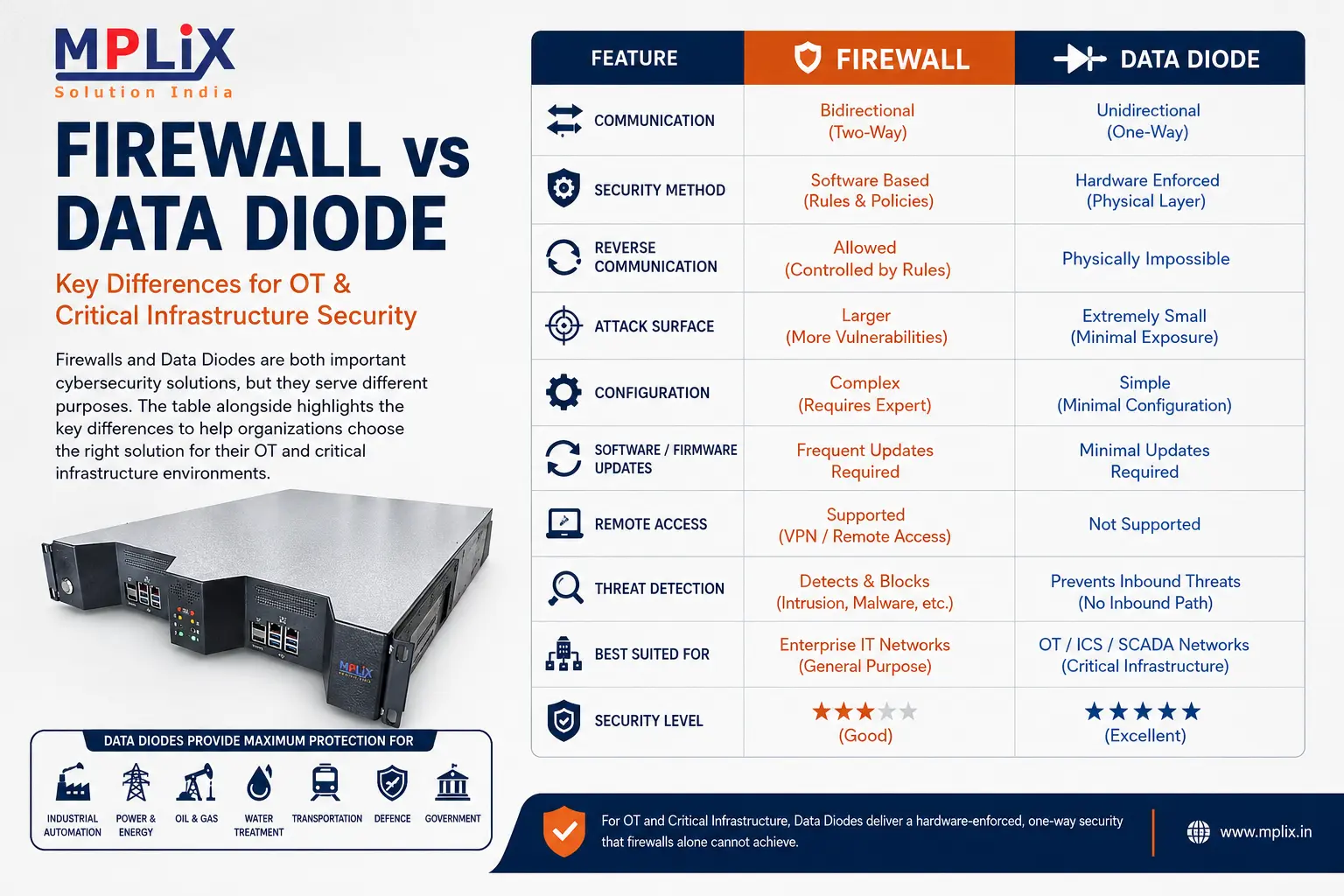
One-Way Communication vs. Traditional Firewalls
Although firewalls remain an essential part of cybersecurity, they inspect and control bidirectional traffic using software-defined rules. If those rules are misconfigured or exploited, attackers may find a path into protected networks.
One-way communication takes a different approach by physically restricting communication to a single direction. Instead of deciding which inbound traffic is allowed, it eliminates inbound communication entirely, providing a higher level of protection for high-security environments.
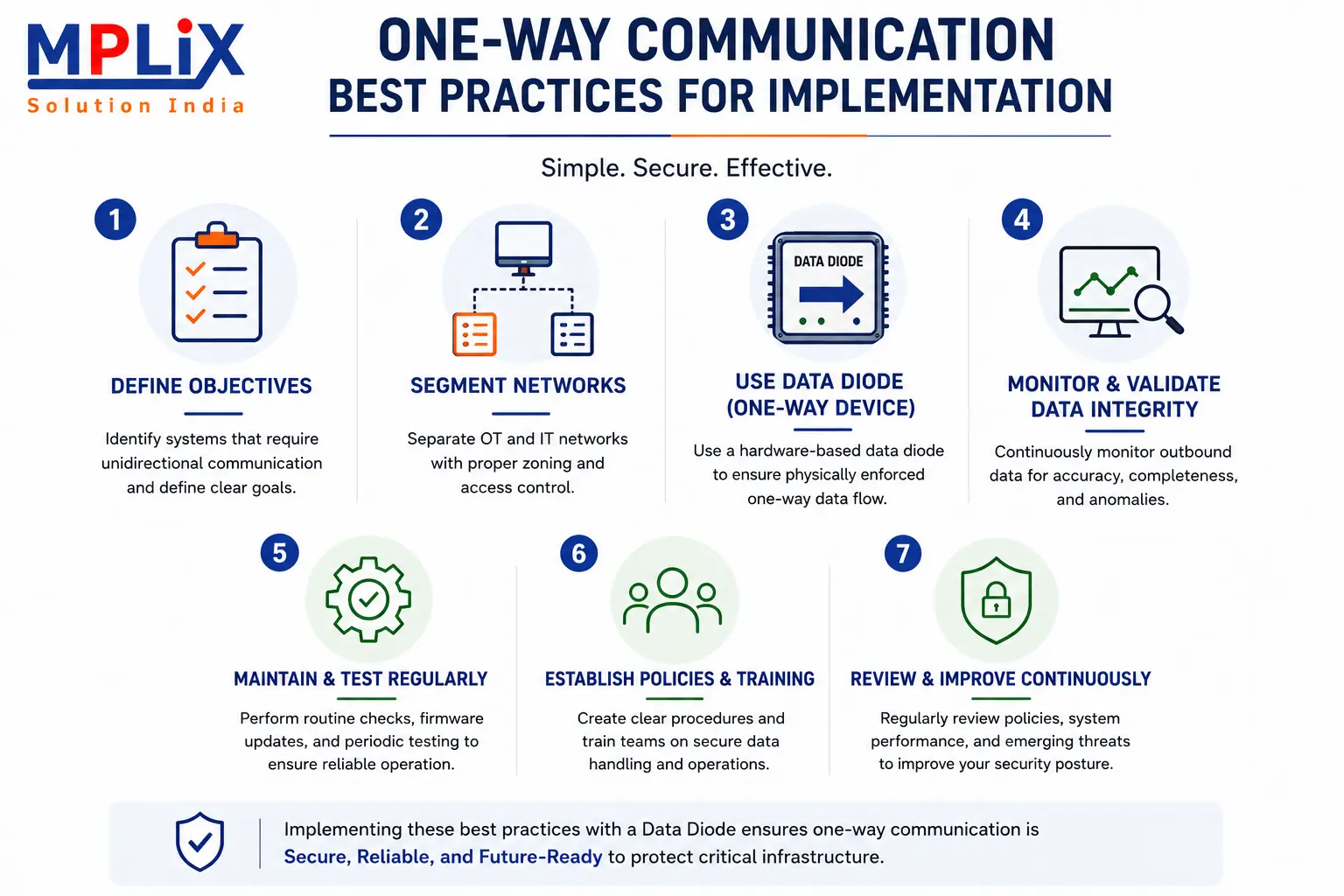
Best Practices for Implementation
To maximize the benefits of one-way communication security, organizations should:
- Identify systems that require strict network isolation.
- Separate IT and Operational Technology (OT) networks wherever possible.
- Transfer only essential operational data.
- Regularly monitor outbound data integrity.
- Combine one-way communication with a layered cybersecurity strategy that includes network monitoring, access control, and employee awareness.
 One-way communication security is widely used across critical infrastructure and industrial environments.
Conclusion
As cyber threats continue to evolve, protecting critical infrastructure requires security strategies that go beyond traditional software-based defenses. One-way communication security offers a practical solution by physically preventing inbound communication while allowing essential operational data to be shared safely.
Whether used in industrial automation, utilities, healthcare, transportation, or government networks, one-way communication helps reduce cyber risk, strengthen network isolation, and improve operational resilience. For organizations seeking to protect their most critical systems, it has become an increasingly valuable component of a modern cybersecurity architecture.