Cybersecurity has become one of the highest priorities for governments around the world. Nation-state attacks, ransomware, insider threats, and sophisticated malware continue to target critical infrastructure, defense networks, transportation systems, and public utilities. Traditional cybersecurity solutions such as firewalls, intrusion detection systems, and antivirus software provide important layers of protection, but they still depend on software that can potentially be bypassed or exploited.
To address these risks, governments increasingly deploy Data Diodes— hardware-based cybersecurity devices that physically enforce one-way data transfer. Unlike conventional network security solutions, a data diode eliminates the possibility of reverse communication, making it one of the most trusted technologies for protecting highly sensitive environments.
In this article, we'll explore why governments rely on data diodes, how they work, and where they are commonly deployed.
What Is a Data Diode?
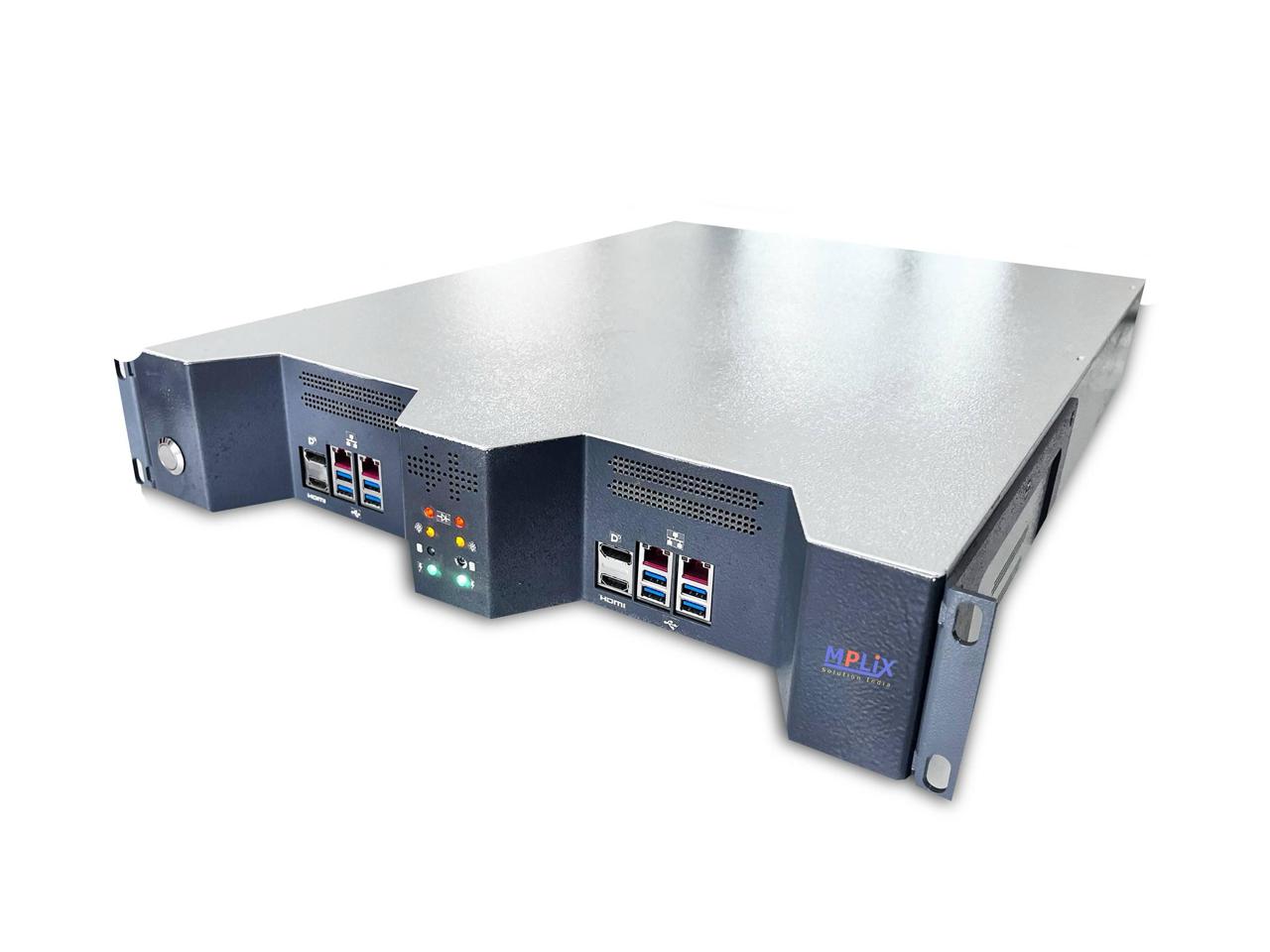
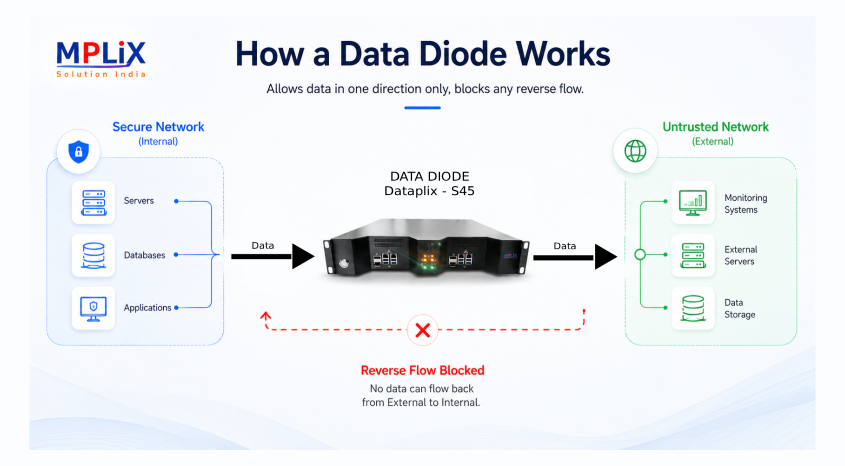
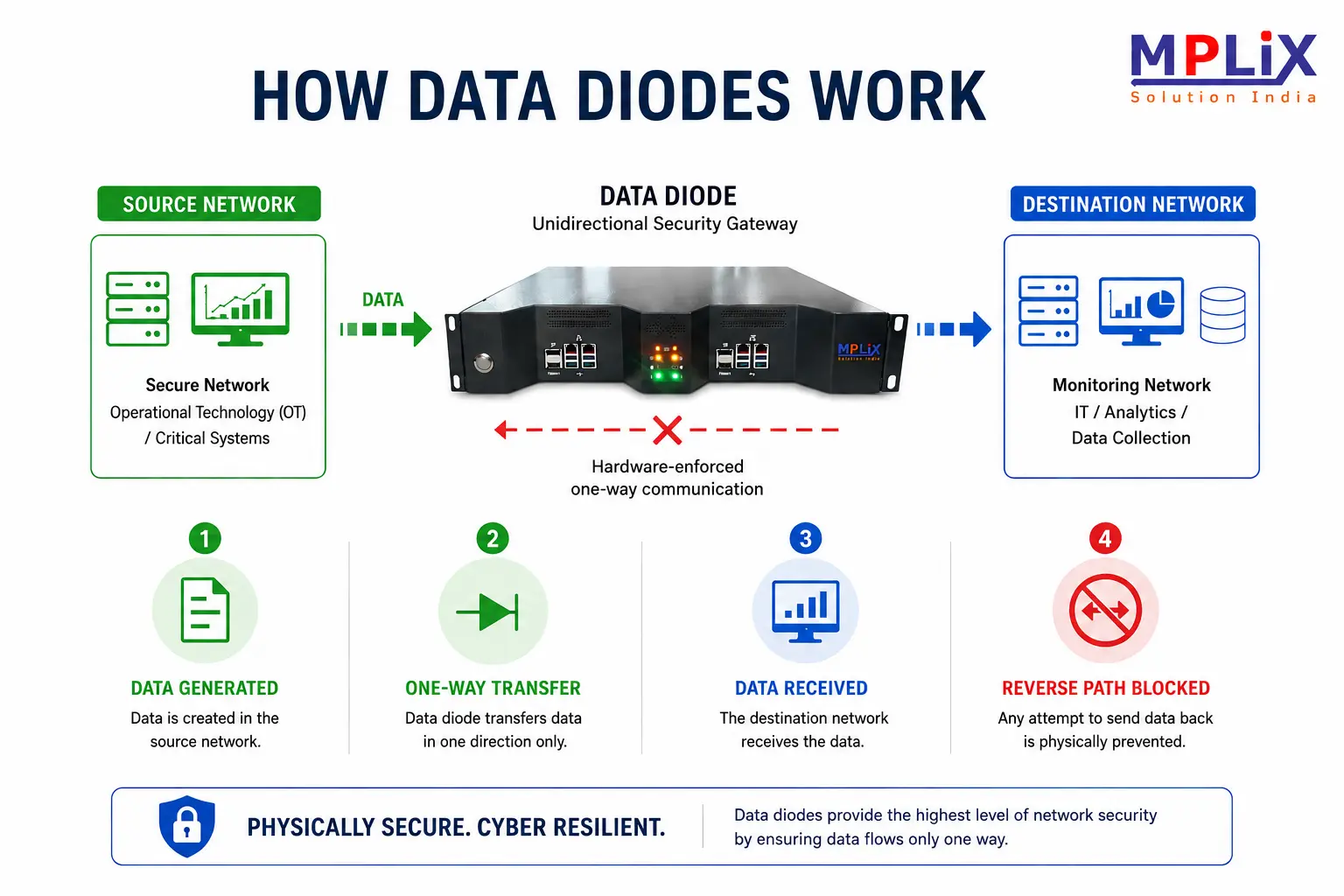
A data diode is a hardware security device that allows information to travel in only one direction. Unlike software-based security controls, it physically prevents data from flowing back into the protected network.
Because the one-way communication is enforced by hardware rather than software rules, attackers cannot establish inbound connections, remotely access protected systems, or exploit vulnerabilities through reverse network traffic.
This makes data diodes particularly valuable in environments where protecting sensitive information is essential.
Why Governments Need Data Diodes
Government agencies manage enormous amounts of highly sensitive information. These include:
- Military communications
- Intelligence databases
- Public infrastructure
- Emergency response systems
- Transportation networks
- Confidential citizen data
These systems are constantly targeted by:
- Nation-state cyber attacks
- Advanced Persistent Threats (APTs)
- Insider threats
- Zero-day exploits
- Ransomware attacks
- Supply chain compromises
- Unauthorized remote access
A successful cyberattack against government infrastructure can disrupt essential services, compromise classified information, or even threaten national security.
Data diodes help eliminate many of these risks by ensuring that external systems cannot communicate back into protected networks.
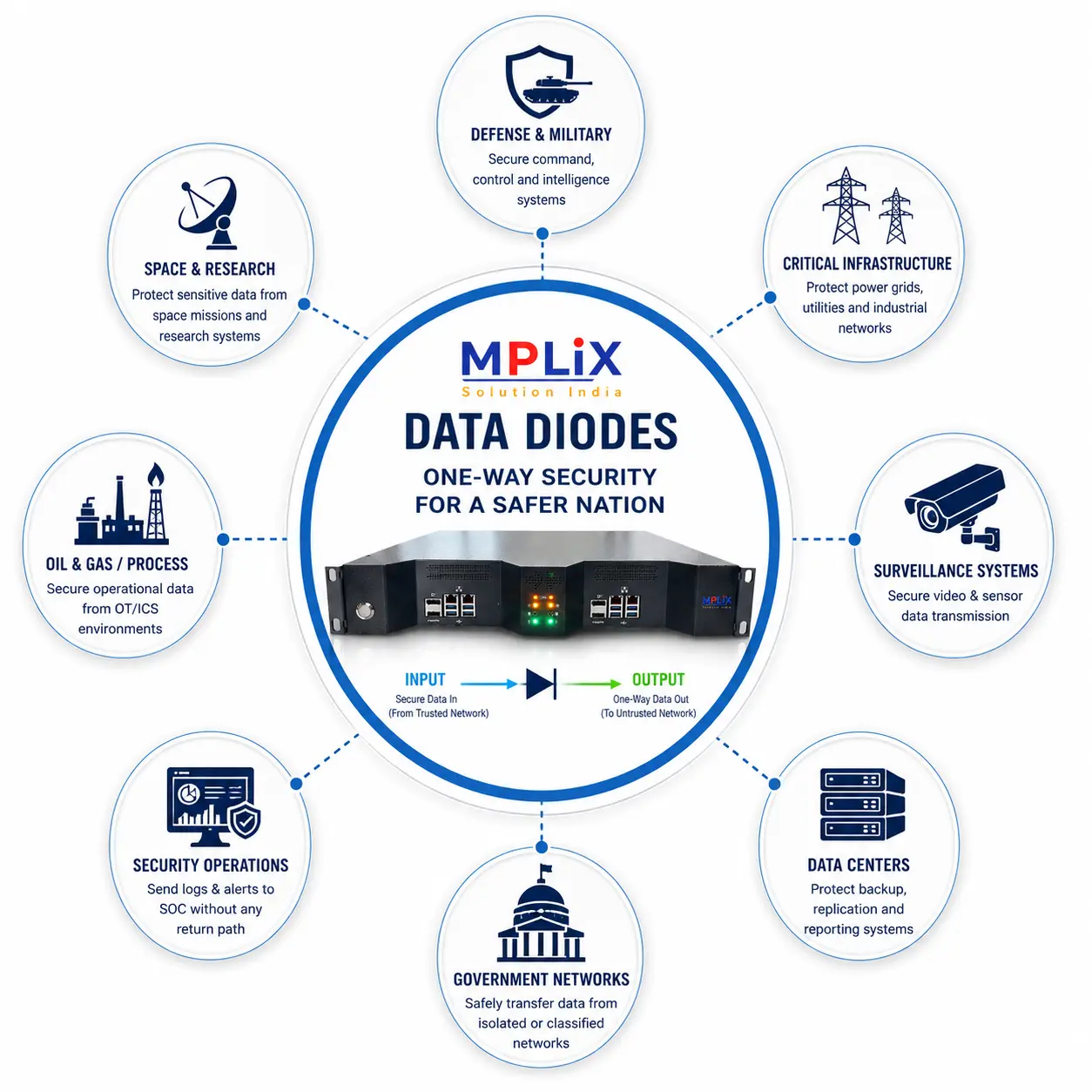 Common government sectors where Data Diodes provide secure one-way communication.
Hardware-Based Security Provides Greater Assurance
One of the primary reasons governments deploy data diodes is their hardware-based approach to cybersecurity.
Traditional security technologies rely on:
- Firewall rules
- Software updates
- Patch management
- Security configurations
- Continuous monitoring
Although these solutions remain important, software vulnerabilities can still create opportunities for attackers.
A data diode removes this concern by physically preventing reverse communication. Since inbound traffic is impossible at the hardware level, attackers cannot bypass the communication path through malware or software exploits.
This provides an additional layer of protection that complements existing cybersecurity measures.
Protecting Classified Government Networks
Many government organizations operate classified networks that must remain isolated from external systems.
However, information often needs to be transferred for purposes such as:
- Security monitoring
- Intelligence sharing
- System health reporting
- Operational analytics
- Surveillance data
- Compliance reporting
A data diode enables this information to move safely from the protected network to external monitoring systems while ensuring that no commands, malware, or unauthorized traffic can travel back.
Securing Critical Infrastructure
Critical infrastructure supports the daily functioning of every nation.
- Power generation facilities
- Water treatment plants
- Oil and gas operations
- Railway systems
- Airports
- Transportation networks
- Nuclear facilities
Many of these environments rely on Operational Technology (OT) and Industrial Control Systems (ICS), which were originally designed for reliability rather than cybersecurity.
Connecting these systems directly to enterprise or internet-facing networks increases cyber risk.
Data diodes allow operational data to be transmitted to centralized monitoring systems without exposing industrial control equipment to inbound attacks.
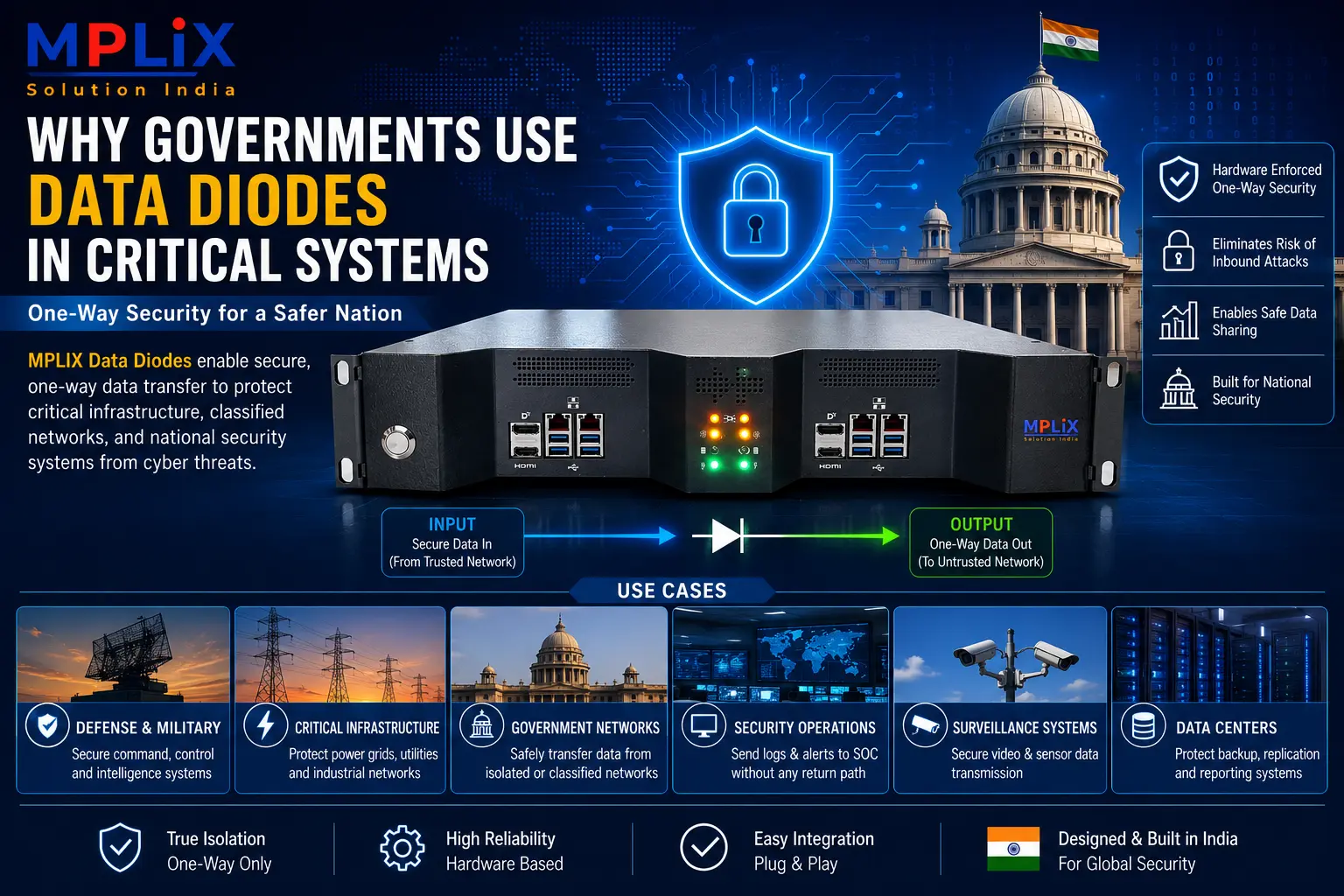 Government and critical infrastructure networks secured using hardware-enforced one-way communication.
Military and Defense Applications
Defense organizations process highly classified information requiring the highest levels of protection.
- Command centers
- Intelligence systems
- Radar platforms
- Surveillance networks
- Naval operations
- Air defense systems
- Tactical communication networks
These environments often need to share information with external systems while preventing any possibility of reverse communication.
Supporting Zero Trust and Network Segmentation
Modern government cybersecurity strategies increasingly focus on Zero Trust Architecture and strong network segmentation.
Data diodes support these strategies by:
- Enforcing one-way communication
- Reducing attack surfaces
- Isolating critical networks
- Preventing lateral movement
- Protecting air-gapped environments
Even if attackers compromise connected enterprise systems, they cannot send commands into networks protected by a properly deployed data diode.
Helping Meet Security and Compliance Requirements
Government organizations often operate under strict cybersecurity regulations and security standards.
Although compliance requirements differ between countries, one-way communication is widely recognized as an effective method for reducing cyber risk.
Data diodes assist organizations by supporting secure network separation, protecting critical assets, and reducing exposure to external threats.
Protecting Air-Gapped Networks
Air-gapped networks are intentionally separated from external systems to safeguard highly sensitive environments.
However, completely isolated systems still require:
- Performance monitoring
- Security event collection
- Operational reporting
- Backup verification
- Compliance reporting
A data diode allows selected information to leave the secure network while preventing any inbound communication.
A Long-Term Investment in Cybersecurity
Government infrastructure often remains operational for decades, making long-term reliability a key consideration.
Unlike software solutions that require frequent updates and ongoing configuration changes, data diodes rely on hardware-enforced communication, providing consistent protection over extended periods.
Because they physically eliminate reverse communication, they remain effective against many evolving cyber threats regardless of new malware or software vulnerabilities.
The Future of Government Cybersecurity
As cyber threats continue to evolve, governments are adopting stronger security architectures built on hardware-based protection, network segmentation, and Zero Trust principles.
Data diodes are becoming increasingly important in securing:
- Smart cities
- Defense communications
- Energy infrastructure
- Industrial automation
- Space programs
- Border security
- Emergency response systems
- National data centers
By physically preventing inbound communication, data diodes help governments reduce cyber risk while enabling secure information sharing between isolated and external networks.
Conclusion
• Governments face increasingly sophisticated cyber threats that target critical infrastructure, military systems, and sensitive public-sector networks. While traditional cybersecurity solutions remain essential, they cannot completely eliminate the risk of software vulnerabilities or unauthorized remote access.
• Data diodes provide an additional level of protection by enforcing true one-way communication at the hardware level. This physical separation prevents attackers from sending malicious traffic into protected environments while allowing critical operational data to be shared securely.
• As cyber warfare, ransomware, and advanced persistent threats continue to evolve, data diodes have become an essential component of government cybersecurity strategies. Their ability to secure air-gapped networks, protect critical infrastructure, and support resilient national security operations makes them one of the most trusted technologies for safeguarding mission-critical systems in the digital age.