How a Data Diode can Prevent Cyber Attacks - Data Diode Use Case
Disclaimer: The incident described in this article is entirely fictional and created for educational purposes. The company, individuals, and events mentioned do not exist. However, the cybersecurity challenges and attack methods discussed are based on real world risks faced by industrial organizations.
The Hidden Risk Behind Convenience
For years, industrial organizations have connected operational systems to business networks to improve visibility, reporting, and decision making. Production data, equipment status, and operational metrics are routinely shared with management teams in real time.
While this connectivity offers significant business advantages, it can also introduce a pathway that attackers may exploit.
The following fictional case study illustrates how a single network connection became the weakest link in an otherwise secure environment and how a Data Diode could have changed the outcome.
The Company: NorthRiver Manufacturing
NorthRiver Manufacturing was a large producer of industrial components with facilities operating around the clock. The company had invested heavily in automation, allowing production lines to be monitored from a central operations center.
The infrastructure was divided into two primary environments:
• Corporate IT Network
• Industrial Control Network
To provide management with real time production information, a monitoring server collected data from the factory floor and transmitted it to business dashboards.
The system worked efficiently and had never experienced a major security incident.
That would soon change.
A Routine Monday Morning
The incident began in an ordinary way.
An employee in the procurement department received an email appearing to come from a trusted logistics partner. The message referenced a delayed shipment and included an attached document.
Nothing about the email appeared suspicious.
The employee opened the file.
Within seconds, malicious software was silently installed on the workstation.
No alarms were triggered.
No visible signs indicated that anything was wrong.
Business operations continued as normal.

The Quiet Investigation
Over the following days, the attackers remained patient.
Rather than launching an immediate attack, they focused on gathering information.
They studied:
• User accounts
• Shared drives
• Internal documentation
• Network architecture
• System access permissions
The attackers gradually built a picture of the company's digital environment.
Eventually, they discovered something valuable.
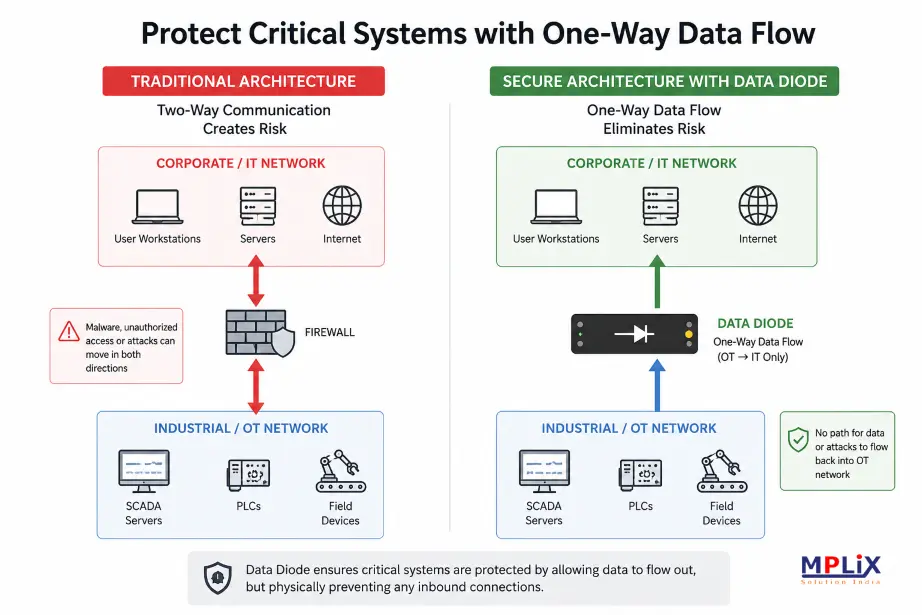
A monitoring server connected both the corporate environment and the production environment.
The server had been implemented years earlier to simplify reporting and improve operational visibility.
To the attackers, it represented an opportunity.
Crossing the Boundary
After obtaining administrative credentials, the attackers gained access to the monitoring system. Although multiple security controls existed, the architecture still allowed approved communication between networks. The attackers used those legitimate pathways to explore deeper into the environment.
Soon they identified:
• Production management servers
• Industrial controllers
• Monitoring applications
• Equipment configuration systems
The attackers now had visibility into critical manufacturing operations.
The final phase of the attack could begin.
The Night Everything Stopped
At 2:07 AM on a Thursday morning, unusual activity appeared across several production systems. Conveyor lines unexpectedly paused. Automated sorting systems stopped responding. Production scheduling applications displayed inconsistent information. Within minutes, operators noticed growing instability throughout the facility. To prevent potential equipment damage, supervisors initiated emergency shutdown procedures. The manufacturing plant fell silent. For the first time in years, production had come to a complete stop.
The Cost of Downtime
The technical recovery process was complex and time consuming. Before operations could resume, engineers had to verify that industrial systems had not been modified or compromised. The shutdown resulted in:
• Lost production hours
• Delayed customer deliveries
• Emergency recovery expenses
• Overtime staffing costs
• Significant reputational damage
Management was surprised.
The company had implemented:
• Firewalls
• Antivirus protection
• Access controls
• Security monitoring
• Employee awareness training
Yet attackers had still found a path into critical systems.
The problem was not the absence of security controls.
The problem was the existence of a pathway.
The Investigation
An external cybersecurity team was brought in to determine how the attackers had reached operational systems. Their conclusion was straightforward. The monitoring server had become a bridge between trusted and less trusted environments. Although the connection was originally designed for legitimate business purposes, it also provided an opportunity for unauthorized access. The investigators recommended redesigning the architecture using a Data Diode.
How a Data Diode Changes the Story
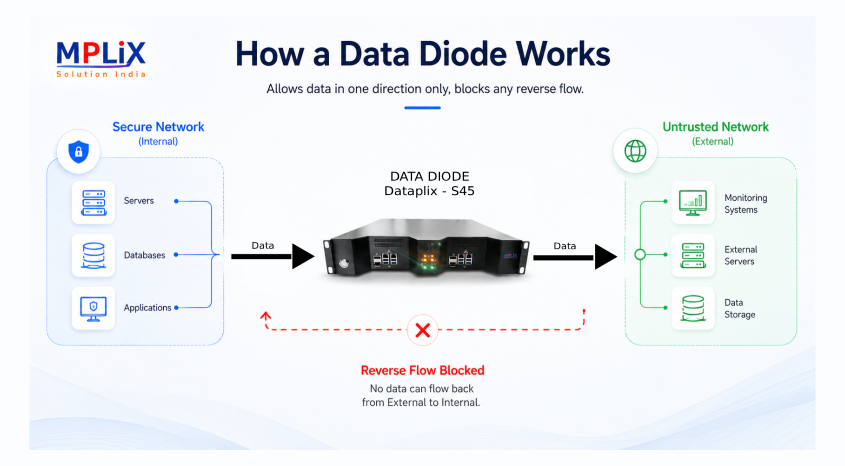
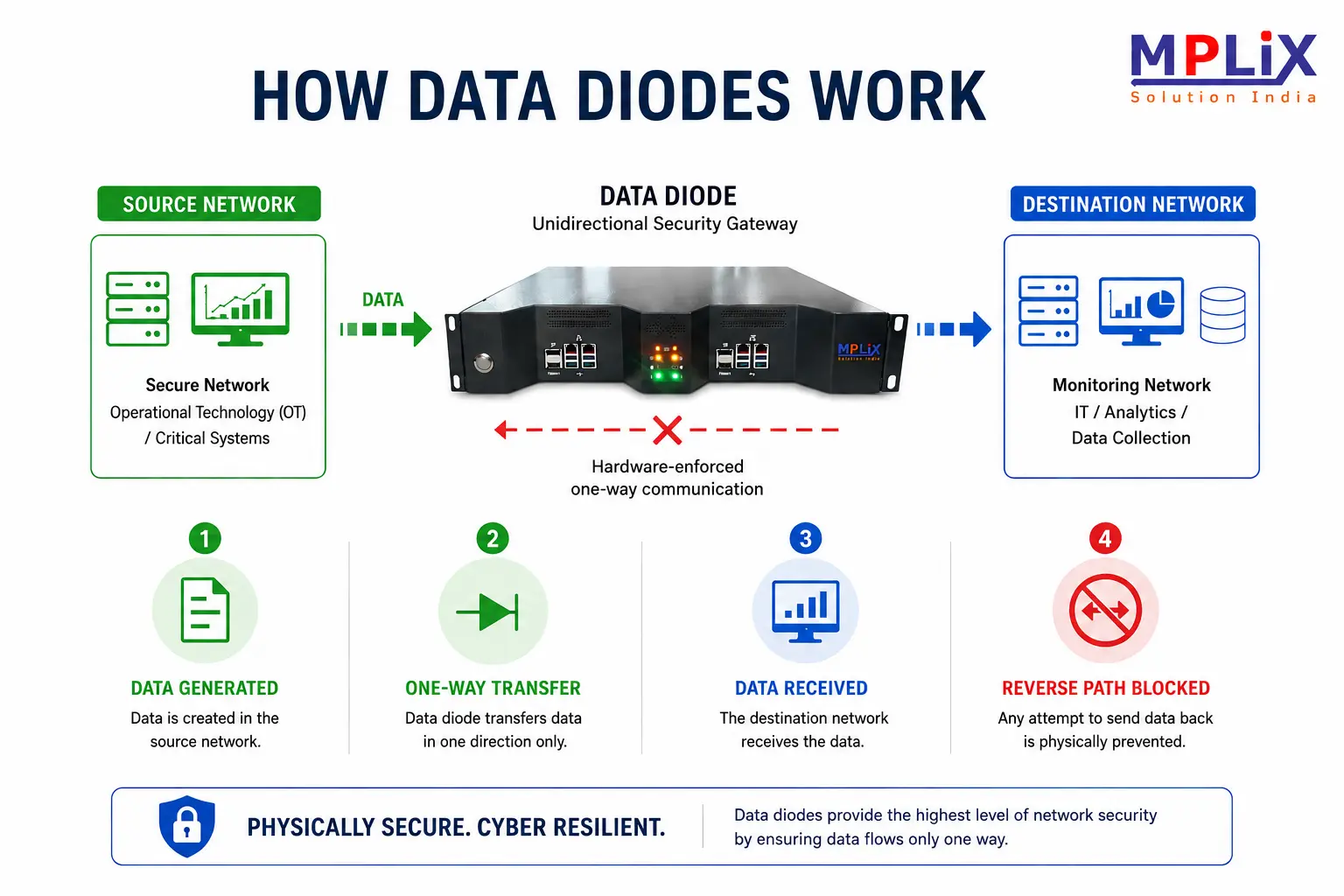
A Data Diode allows information to travel in only one direction.
In NorthRiver Manufacturing's case, production data still needed to reach management dashboards.
However, management systems did not need the ability to send commands back into the factory network.
Under a Data Diode architecture:
• Production information could flow outward.
• Monitoring data could reach corporate users.
• Reports could still be generated.
• Operational visibility would remain intact.
What would not be possible is equally important:
• Remote commands could not enter the control network.
• Malware could not spread into operational systems.
• Attackers could not pivot from business systems into production systems.
• Unauthorized access attempts would be physically blocked.
Even if the corporate network became fully compromised, the industrial environment would remain isolated.
Reimagining the Incident
Consider the same attack occurring after a Data Diode deployment. The employee still opens the malicious attachment. The corporate network is still compromised. The attackers still gain administrative access. However, when they attempt to move toward operational systems, they encounter a physical limitation rather than a software rule. The route simply does not exist. Production continues uninterrupted. Equipment remains operational. Customer orders ship on schedule. The incident becomes an IT security event rather than an operational crisis.
Conclusion
- • Modern industrial organizations depend on the flow of information, but not every connection should be bidirectional.
- • Firewalls, intrusion detection systems, and endpoint protection remain essential components of a cybersecurity strategy. However, they rely on configurations, policies, and software based controls.
- • A Data Diode introduces a different layer of protection by enforcing one way communication at the architectural level.
- • For organizations operating critical infrastructure, manufacturing facilities, energy systems, transportation networks, or other high value environments, reducing attack pathways is often more effective than attempting to monitor every possible threat.
Sometimes the strongest defense is not detecting an attack.
Sometimes it is ensuring the attack has nowhere to go.
|
Author |
: Mplix Solution India |
|
Date |
: 20-06-2026 |
Our Data Diode Solution
MPLIX offers hardware-based Data Diode solutions designed to provide secure one-way data transfer for critical infrastructure, industrial networks, OT environments, and air-gapped systems.
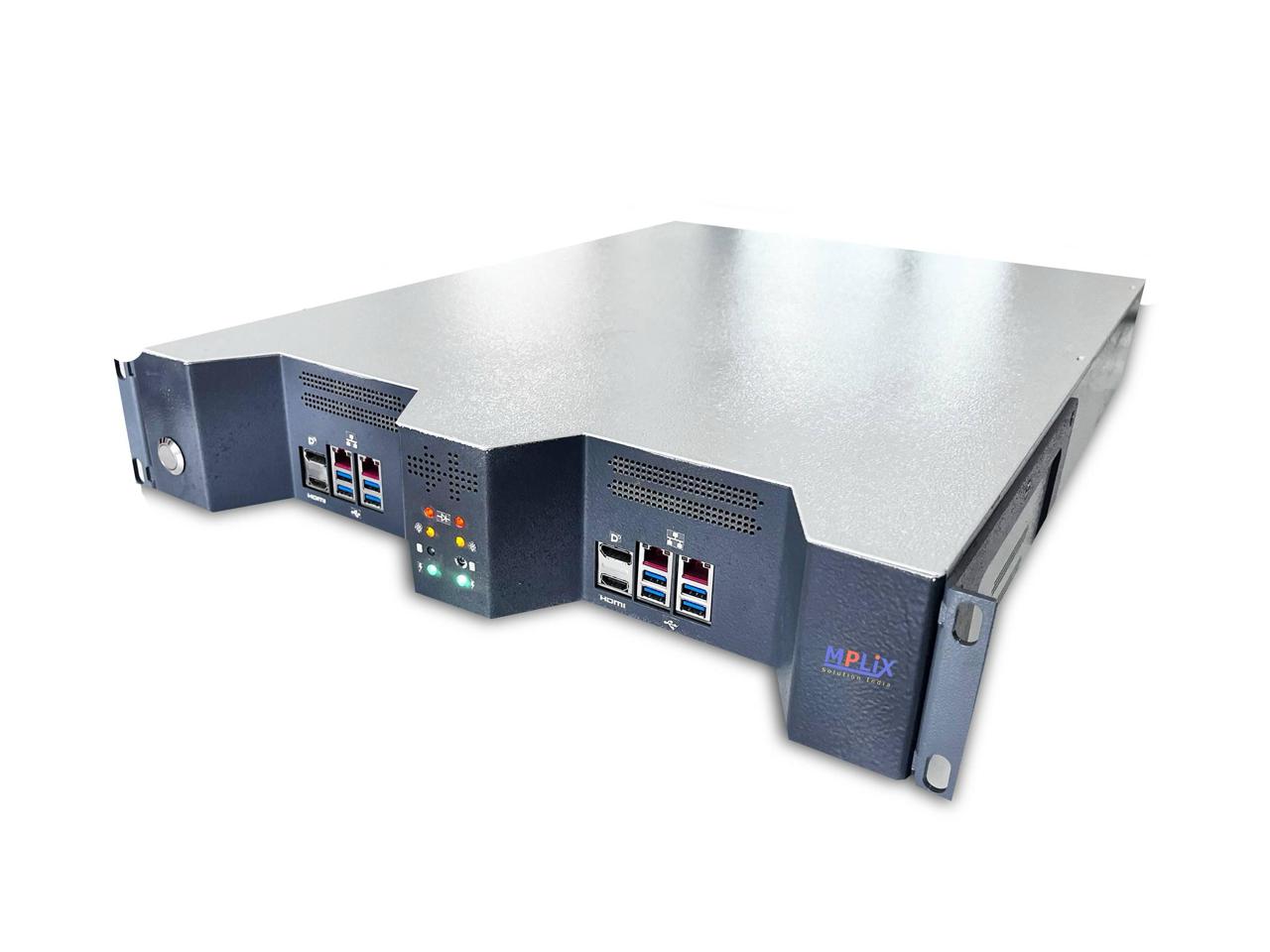
DataPlix-S45
DataPlix-S45 is a high-assurance hardware Data Diode engineered for secure unidirectional data flow. It helps organizations protect critical assets, OT networks, SCADA systems, and sensitive infrastructure from cyber threats while maintaining operational visibility.
- • Hardware-Enforced Security
- • One-Way Data Transfer
- • Industrial & Critical Infrastructure Protection
- • 10Gbps Throughput