As organizations become increasingly connected, the challenge of securing critical systems has grown more complex than ever before. Cyberattacks targeting government agencies, industrial control systems, energy providers, and other critical infrastructure continue to rise, exposing the limitations of traditional software-based security measures. While firewalls, intrusion detection systems, and endpoint protection remain essential components of cybersecurity, they cannot eliminate every potential attack vector.
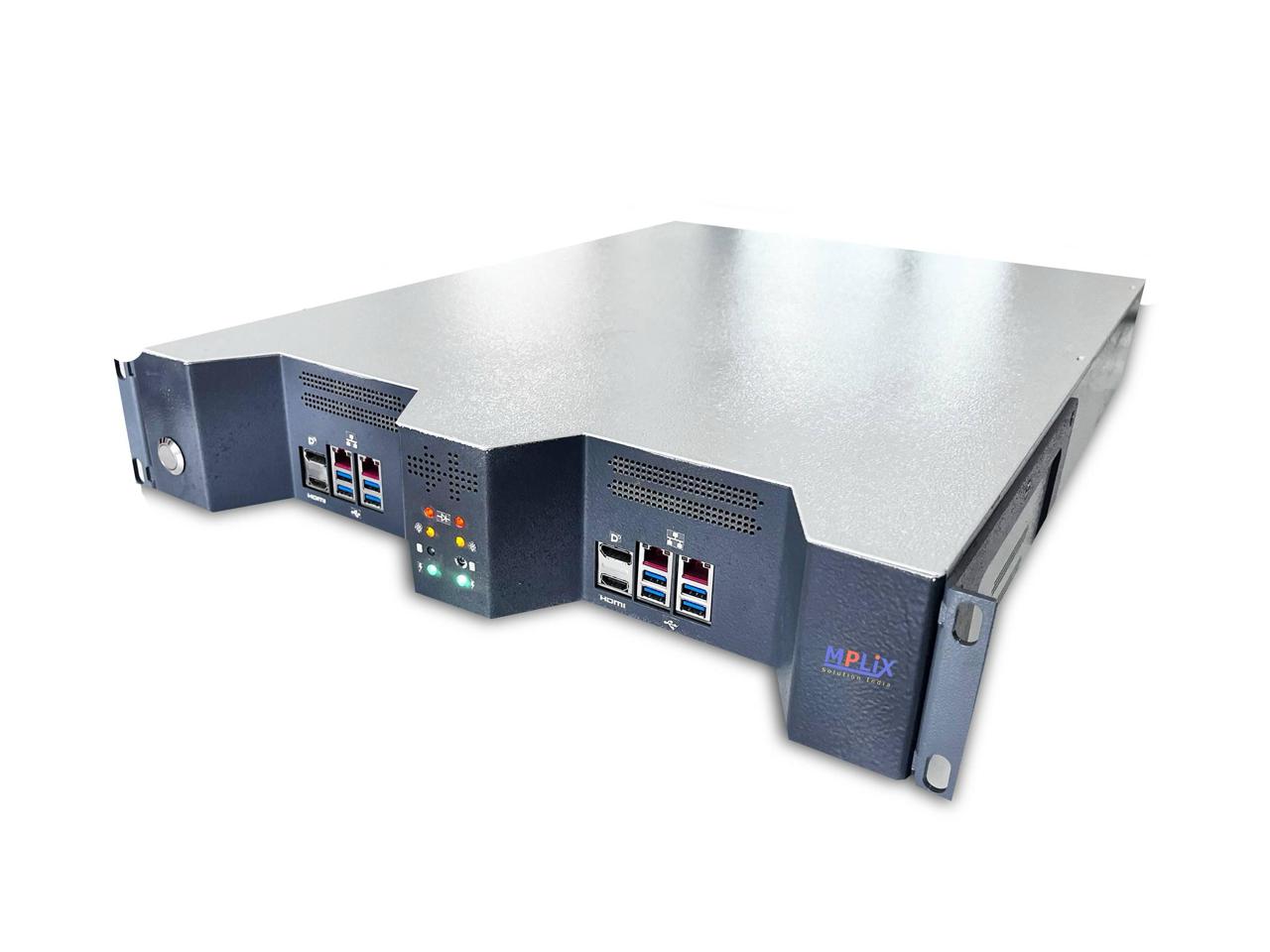
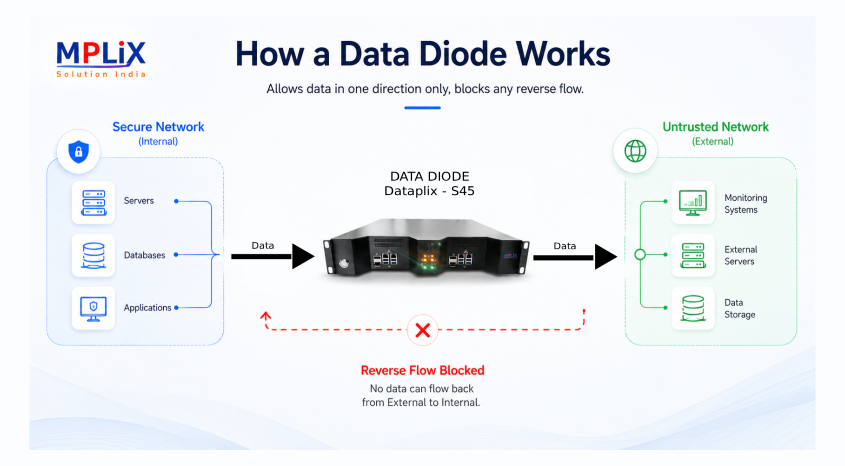
This challenge led to the widespread adoption of data diodes hardware-enforced devices that allow information to travel in only one direction. By physically preventing any reverse communication, data diodes provide a level of security that software solutions alone cannot achieve.
Originally developed for military applications, data diodes have evolved into a critical cybersecurity technology used across industries worldwide. Today, they play an essential role in protecting operational technology (OT), industrial control systems (ICS), government infrastructure, healthcare networks, and other environments where security, reliability, and operational continuity are paramount.
Military Origins: The Birth of Hardware-Enforced Security
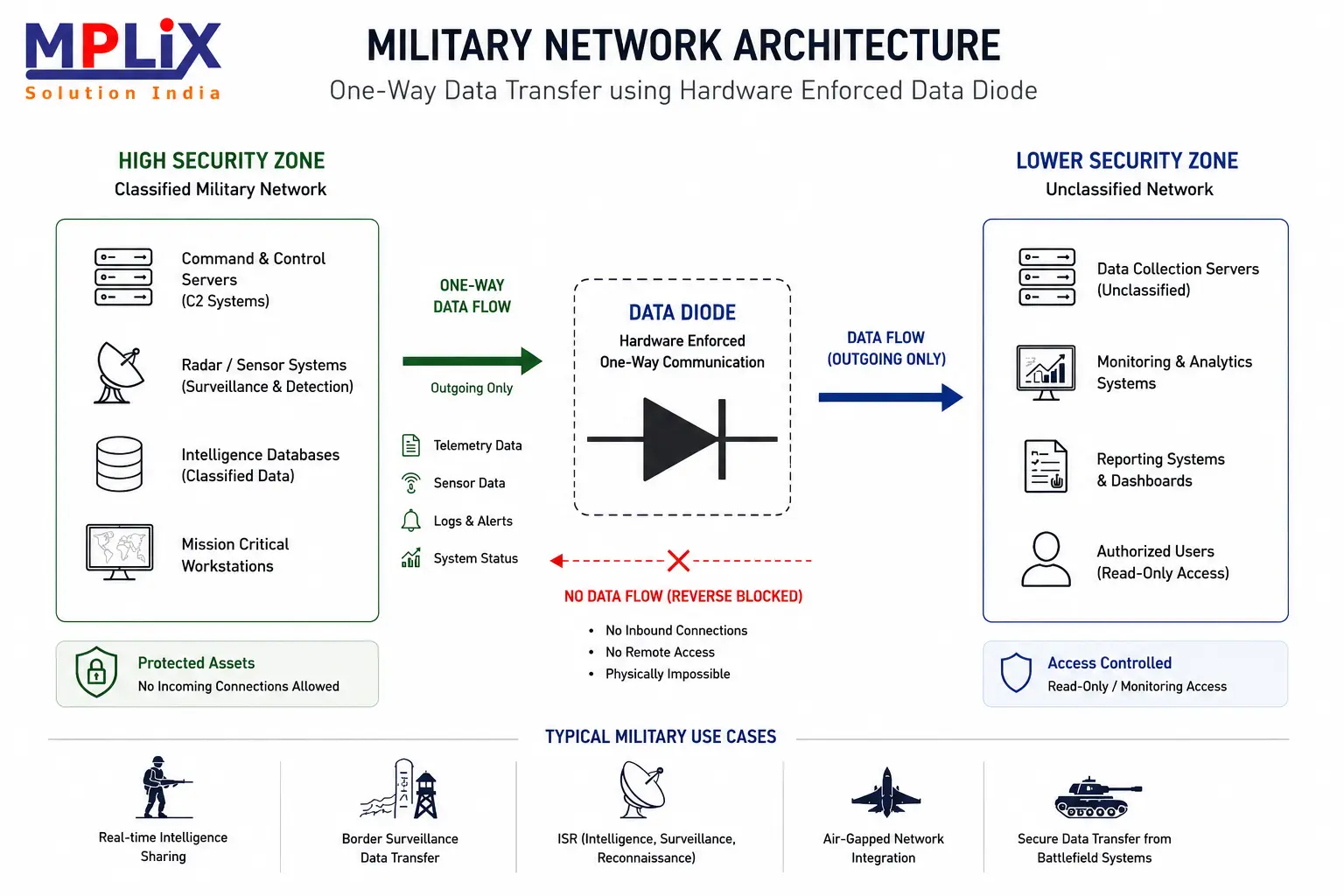
The history of data diodes begins with military and defense organizations that required an uncompromising approach to information security. During the late twentieth century, defense agencies faced the challenge of sharing operational intelligence without exposing classified systems to external threats.
Traditional networking technologies relied on two-way communication, allowing systems to both send and receive data. Although protected by firewalls and access controls, these networks remained vulnerable to software exploits, insider threats, and misconfigurations.
To eliminate these risks, engineers developed the concept of one-way communication. Instead of relying solely on software policies, data diodes physically removed the capability for information to flow back into secure networks.
This hardware-based approach ensured that classified systems could transmit intelligence, surveillance data, or operational reports to external monitoring environments without accepting incoming traffic.
The result was a significant reduction in cyber risk. Because there is no physical return path, attackers cannot remotely access protected systems, deploy malware, or establish command-and-control channels.
This principle of hardware-enforced isolation quickly became a trusted cybersecurity strategy for military installations, intelligence agencies, and defense contractors responsible for protecting highly sensitive information.
Industrial Adoption: Protecting Operational Technology
As industries embraced automation and digital transformation, operational technology environments became increasingly connected to enterprise IT systems. Manufacturing facilities, power plants, oil and gas operations, water treatment facilities, and transportation networks began sharing operational data with centralized monitoring platforms to improve efficiency and decision-making.
While this connectivity enabled predictive maintenance, real-time analytics, and remote operations, it also expanded the cyberattack surface.
Industrial control systems were originally designed with reliability and availability as primary objectives rather than cybersecurity. Many legacy systems continue to operate using protocols that lack modern authentication and encryption mechanisms, making them attractive targets for cybercriminals.
Data diodes emerged as an effective solution for securely integrating these operational environments with business networks.
Instead of allowing unrestricted bidirectional communication, organizations implemented one-way data transfer from industrial systems to enterprise monitoring platforms. Production metrics, sensor readings, alarms, equipment status, and system logs could be transmitted outward while ensuring that no external commands could reach critical control equipment.
This architecture offers several advantages:
- Protects industrial control systems from remote cyberattacks.
- Enables continuous operational monitoring.
- Supports predictive maintenance initiatives.
- Simplifies compliance with industrial cybersecurity standards.
- Reduces the risk of ransomware affecting production environments.
- As Industry 4.0 continues to expand, data diodes remain one of the most effective technologies for balancing connectivity with operational security.
Government Applications: Securing National Infrastructure
Government organizations manage some of the world's most critical digital assets. From defense systems and intelligence databases to emergency response networks and public utilities, these environments require the highest levels of cybersecurity.
Data diodes have become an important component of government security architectures because they enable secure information sharing without compromising network isolation.
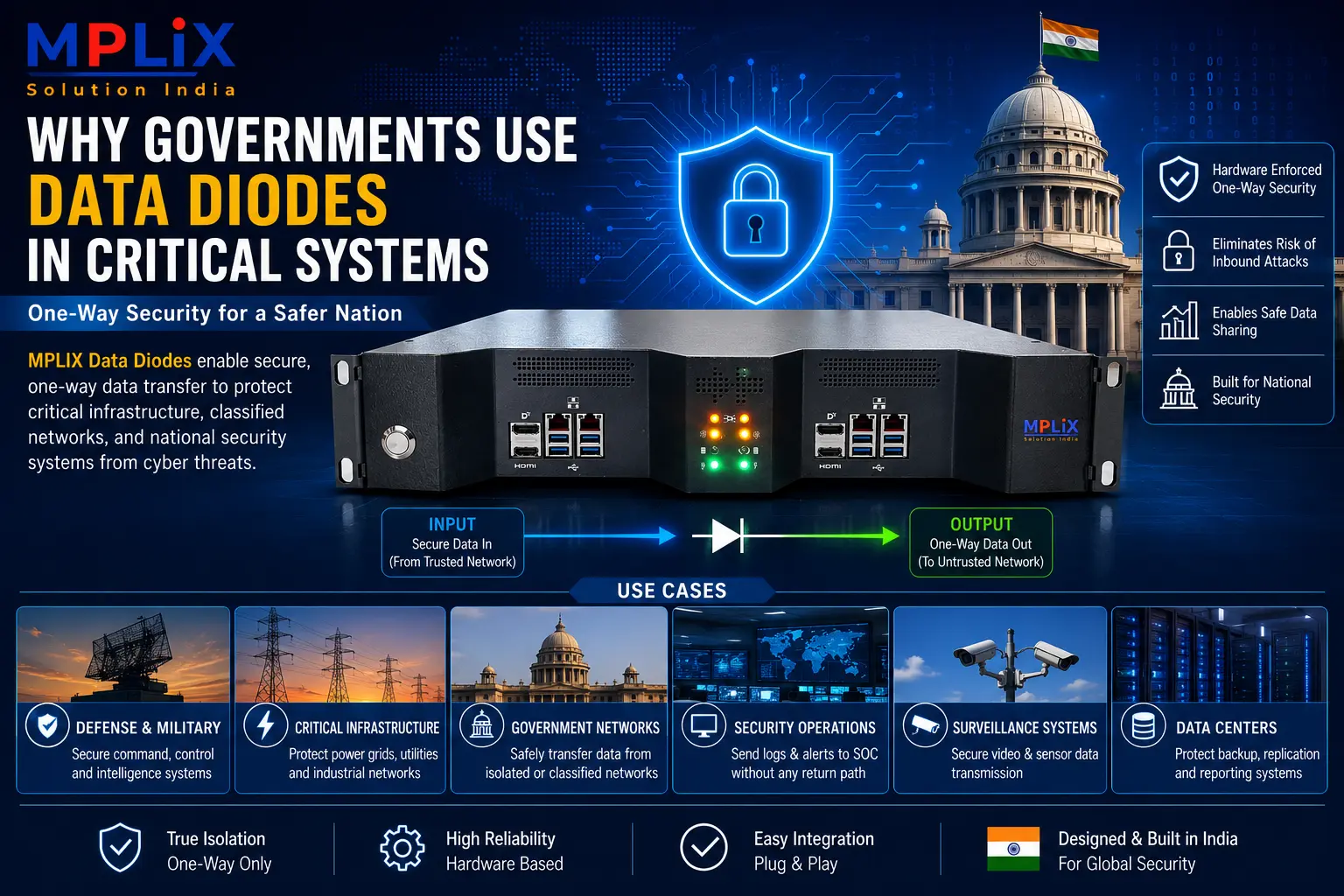
Today, government agencies deploy data diodes across numerous applications, including:
- National defense systems
- Intelligence operations
- Border security
- Emergency management centers
- Critical infrastructure monitoring
- Public utilities
- Law enforcement databases
- Space and satellite communications
For example, a power grid operator may need to continuously transmit operational information to a national monitoring center. A data diode allows this information to flow outward while ensuring that external systems cannot send commands back into the operational environment.
Similarly, surveillance systems can securely forward video streams and sensor data to centralized command centers without exposing edge devices to remote attacks.
Many governments now recommend or mandate hardware-enforced network separation for highly sensitive systems, recognizing that physical isolation provides stronger protection than software controls alone.
Expanding Beyond Critical Infrastructure
Although data diodes were originally associated with military and industrial applications, their adoption has steadily expanded across numerous commercial sectors.
Healthcare institutions increasingly rely on data diodes to facilitate secure data exchange while protecting medical devices and hospital networks through hardware-enforced one-way communication.
Financial institutions deploy data diodes to isolate transaction processing environments from external monitoring systems, reducing the risk of unauthorized access and cyber fraud.
Research laboratories rely on hardware-enforced one-way communication to protect valuable intellectual property while sharing experimental results with authorized partners.
Transportation providers including airports, railway operators, and maritime authorities use data diodes to secure operational systems responsible for passenger safety and infrastructure management.
As cyber threats become increasingly sophisticated, more organizations recognize that physical network isolation provides an additional layer of defense that complements traditional cybersecurity technologies.
Future Demand Trends
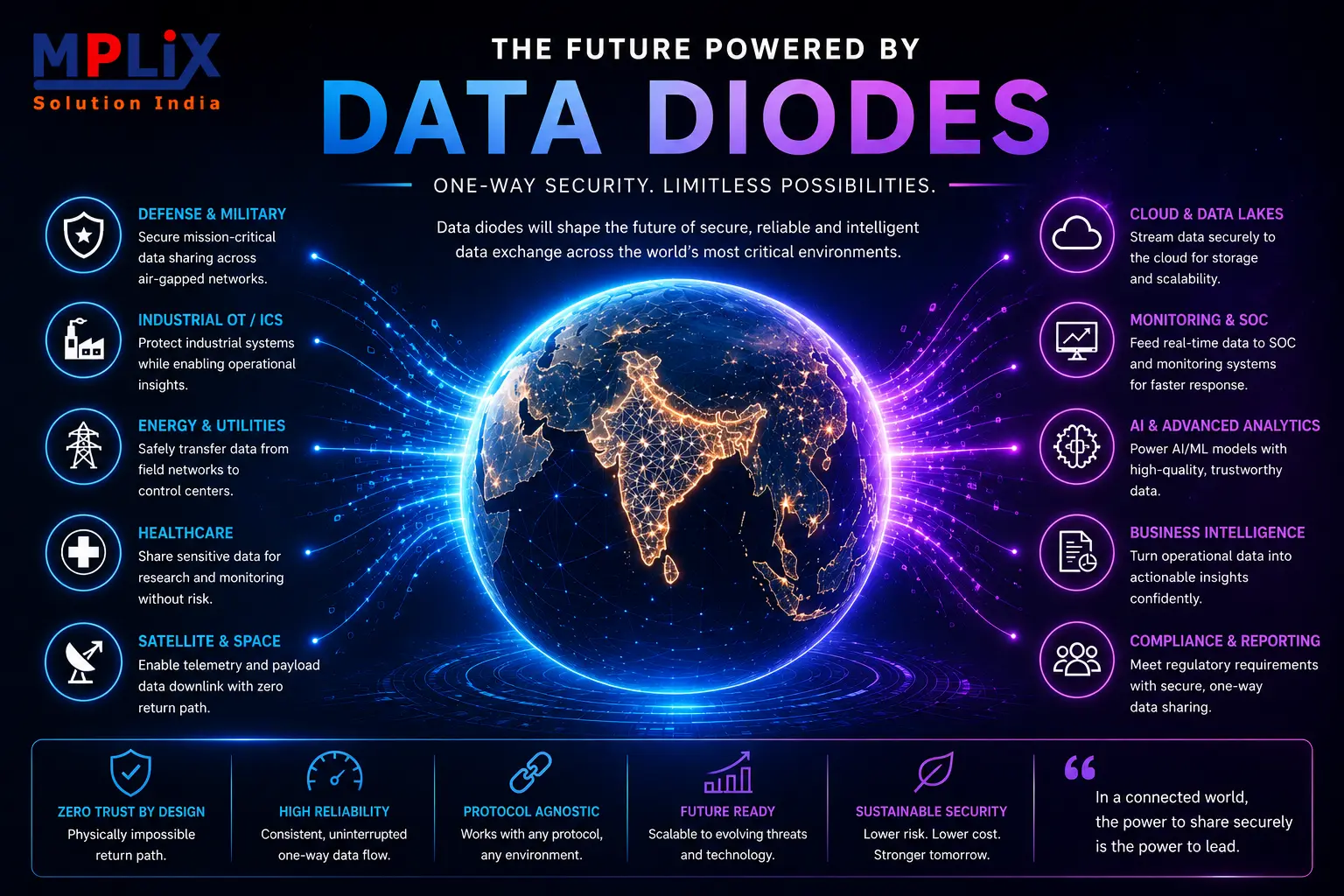
The global demand for data diodes is expected to continue growing as organizations strengthen their cybersecurity strategies and modernize critical infrastructure.
Several key trends are driving this increased adoption.
Growing Sophistication of Cyber Threats
Cyberattacks are becoming more targeted, persistent, and disruptive. Nation state actors and organized cybercriminal groups increasingly focus on critical infrastructure where operational disruptions can have widespread consequences.
Organizations are therefore investing in technologies that eliminate attack paths rather than simply detecting malicious activity after it occurs.
Expansion of Industrial IoT
Industrial Internet of Things (IIoT) devices generate enormous volumes of operational data that organizations wish to analyze using cloud platforms and centralized monitoring systems.
Data diodes allow this information to be transmitted securely while preventing cloud-connected systems from interacting directly with industrial equipment.
Zero Trust Security Adoption
Modern cybersecurity strategies increasingly embrace Zero Trust principles, where every connection must be verified and unnecessary communication paths are eliminated.
Data diodes naturally align with this philosophy by enforcing the principle of least privilege through hardware-based one-way communication.
Regulatory Compliance
Governments and industry regulators continue strengthening cybersecurity requirements across sectors such as energy, transportation, healthcare, and utilities.
Hardware-enforced isolation helps organizations comply with standards that require secure separation between operational and enterprise networks.
Artificial Intelligence and Advanced Analytics
Artificial intelligence is transforming industrial operations through predictive maintenance, anomaly detection, and real-time operational intelligence.
These technologies require continuous access to operational data while ensuring that AI platforms cannot unintentionally introduce risks into critical systems.
Data diodes provide the secure foundation for this data exchange, enabling organizations to leverage advanced analytics without compromising operational security.
Conclusion
The evolution of data diodes reflects the changing priorities of cybersecurity over the past several decades. What began as a specialized technology developed for military and intelligence applications has become an essential security solution for industries, governments, healthcare providers, transportation networks, financial institutions, and other organizations responsible for protecting critical infrastructure.
Unlike software-only security solutions, data diodes provide hardware-enforced one-way communication that physically prevents unauthorized inbound traffic. This unique capability significantly reduces the attack surface while enabling organizations to securely share operational data with monitoring, analytics, and management systems.
As digital transformation, Industrial IoT, artificial intelligence, and cloud connectivity continue reshaping modern infrastructure, the need for secure network isolation will only increase. Data diodes are well positioned to meet this demand by combining robust cybersecurity with operational reliability.
For organizations seeking to protect mission-critical environments while enabling secure information exchange, data diodes represent more than a cybersecurity device they are a strategic investment in long-term resilience, operational continuity, and the future of critical infrastructure protection.
Frequently Asked Questions
1. What is a data diode?
A data diode is a hardware-based cybersecurity device that allows data to travel in only one direction, physically preventing any reverse communication and significantly reducing the risk of cyberattacks.
2. Why were data diodes first developed?
They were originally designed for military and defense organizations to protect classified networks while enabling secure transfer of information to lower-security systems.
3. Which industries use data diodes today?
Data diodes are widely used in defense, government, energy, manufacturing, oil and gas, healthcare, transportation, utilities, finance, and other critical infrastructure sectors.
4. Are data diodes better than firewalls?
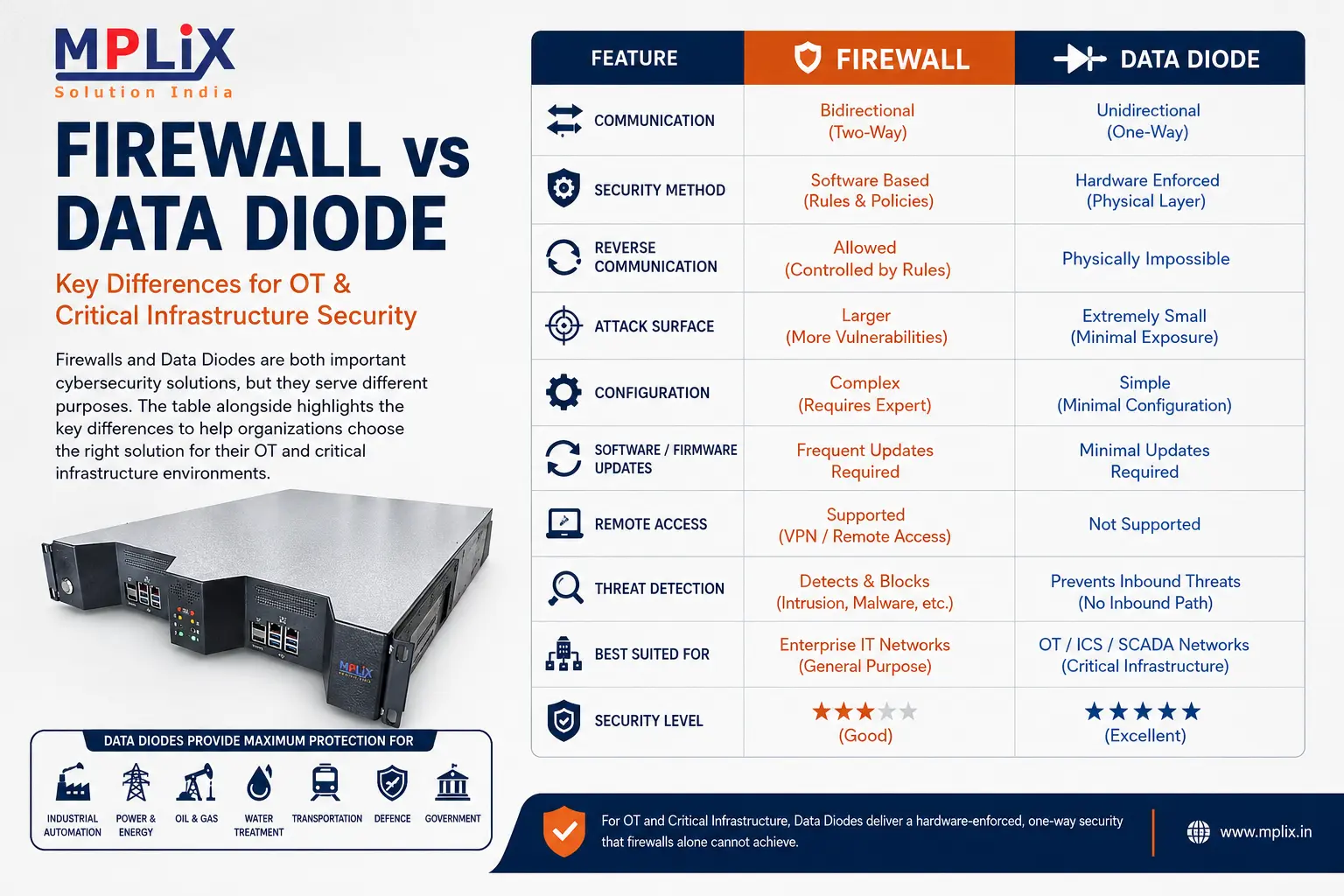
Data diodes and firewalls serve different purposes. Firewalls filter traffic based on configurable rules, while data diodes physically enforce one-way communication, making inbound network attacks impossible through the protected connection.
5. Why is the demand for data diodes increasing?
The growing frequency of cyberattacks, adoption of Industrial IoT, Zero Trust security strategies, regulatory compliance requirements, and the modernization of critical infrastructure are all driving increased demand for data diode technology.